
Los Angeles homeowners face unique climate challenges where proper insulation is critical.
Inadequate insulation forces HVAC systems to work harder, creating temperature inconsistencies and higher utility costs.
This article explains the key signs your home’s insulation needs attention and how to restore comfort and efficiency.
Key takeaways
Visible deterioration, like sagging, compression, or discoloration in attic insulation, indicates it needs to be replaced.
When insulation loses its fluffy, uniform look and hangs limply from rafters or compresses into dense, flat areas, it has lost the air pockets that provide its thermal resistance.
Finding insulation material scattered outside your home often indicates pest infestations have compromised your thermal barrier.
When rodents and birds invade your home, they nest in insulation and actively tear it apart to build their homes, leaving trails of fibers.
Mold spots or water stains on walls and ceilings point to moisture penetration issues.
Once water infiltrates insulation materials, they lose their insulating properties entirely while creating ideal conditions for microbial growth.
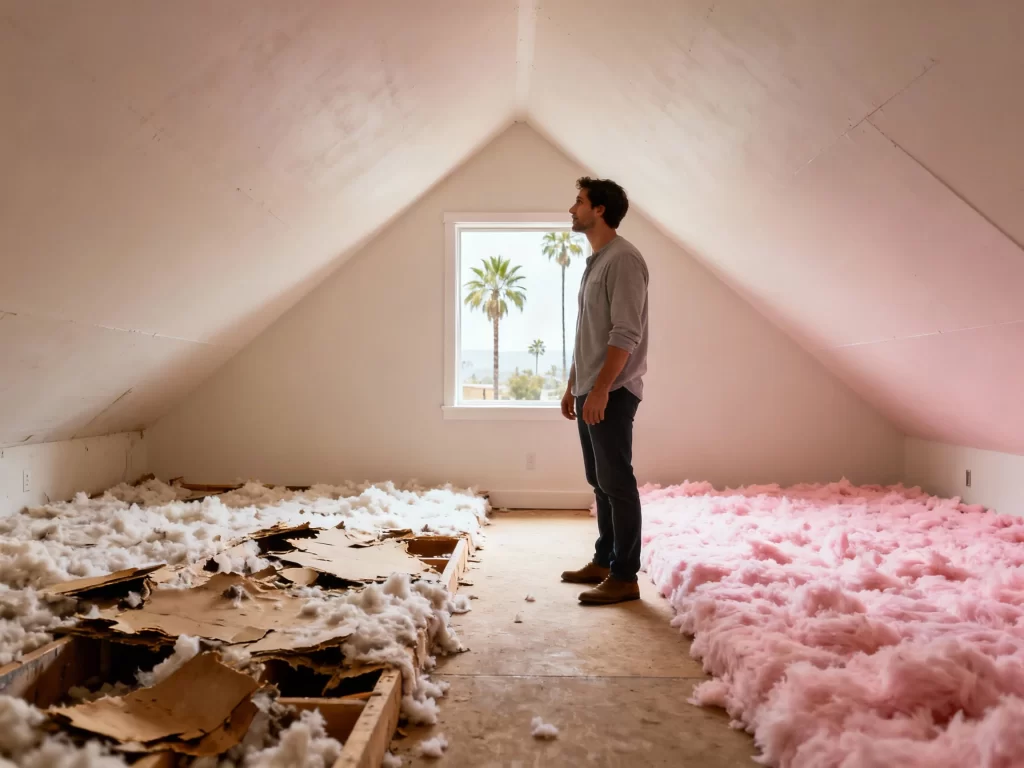
Gaps between insulation batts or areas where insulation has pulled away from joists create thermal bridges that significantly reduce overall energy efficiency.
These openings are like open windows in your thermal envelope, allowing heat to flow freely through specific areas while the rest of your insulation struggles to compensate.
Exposed attic floor joists are a clear sign that your insulation has settled or was never installed to an adequate depth. If you can clearly see the wooden framing members when you peek into your attic, your insulation is inadequate.
Dust accumulation turns pink or yellow insulation a dull gray color, indicating age-related breakdown that drastically reduces its R-value (insulation level) and performance.
This color change represents years of airborne particles penetrating and degrading your insulation.
Noticeable temperature differences between rooms or floors indicate insulation deficiencies.
When your bedroom feels like a refrigerator while your living room is comfortably warm, you are experiencing inconsistent thermal protection.
Walls, floors, and ceilings that feel cold to the touch during winter or radiate heat during summer suggest poor insulation. Interior surfaces should maintain temperatures relatively close to the indoor air temperature.
Drafty areas near windows, doors, or electrical outlets often reveal inadequate insulation and air sealing that proper insulation services would eliminate.
In higher-elevation parts of LA County, ice dams may form on your roof during colder weather. This happens when heat escapes through an under-insulated attic.
While Los Angeles does not experience the severe winter conditions of northern climates, homes in areas like the San Gabriel Mountains can still develop these telltale signs of attic insulation failure.
HVAC systems running continuously yet failing to maintain comfortable temperatures typically signal inadequate insulation.
Sudden, unexplained spikes in utility bills often indicate deteriorating insulation. While gradual increases over the years is normal, a sharp jump within a single billing cycle suggests a major drop in energy efficiency.
Consistently higher energy costs compared to similarly-sized homes in your neighborhood are another telltale sign. If your 1,500-square-foot bungalow costs twice as much to cool as your neighbor’s identical home, the explanation often lies hidden in your walls and attic.

Most insulation materials begin degrading after 15 to 20 years, with homes built before modern energy codes (pre-1980s) almost certainly requiring comprehensive insulation updates. Older building standards did not account for today’s energy efficiency expectations.
Los Angeles’ unique climate conditions, including coastal humidity, and seasonal Santa Ana winds, can further accelerate insulation deterioration.
Different insulation types have varying longevity. Fiberglass can last 80—100 years when properly maintained, while cellulose typically needs replacement after 20—30 years.
Understanding your home’s insulation type helps establish realistic expectations. A home with well-maintained fiberglass might still be performing adequately at 40 years, while one with cellulose installed during the same period likely needs attention.
Additionally, homes with previous water damage from plumbing leaks, or roof issues likely have compromised insulation regardless of its age or original quality rating.
Water exposure fundamentally changes insulation’s physical properties, causing material compression, microbial growth (including mold), and loss of structural integrity.
Even if the leak was repaired years ago, the nearby insulation was probably never inspected.
Persistent musty odors or increasing allergy symptoms often indicate mold growth. These smells indicate moisture-damaged materials. Compromised insulation hosts mold colonies that can release spores throughout the home.
Increased outdoor noise penetration can also suggest insulation deterioration. The same air pockets that trap heat also absorb sound waves.When you suddenly notice traffic sounds, neighborhood conversations, or aircraft noise more prominently than before, your insulation has likely lost density and thickness.
Professional energy assessments can identify specific insulation deficiencies and recommend targeted solutions for your home’s unique architectural and climate needs.
Qualified professionals use diagnostic tools to pinpoint where your home is losing energy and how to address those vulnerabilities most effectively.
When you invest in proper insulation, you’ll reduce energy bills while creating a more comfortable, consistent living environment that enhances quality of life year-round.
Contact Affordable Heating and Air’s insulation experts at (818) 722-1332 or visit our service page to schedule a comprehensive insulation evaluation and learn about energy-saving rebate opportunities.
Ready to upgrade? Explore advanced insulation innovations tailored to 2026 California energy codes and see which high-performance options will give you the biggest comfort and savings gains.
The most common signs include uneven temperatures between rooms — rooms that are hot in summer or cold in winter despite the HVAC running.
Rising energy bills compared to past seasons or similar-sized homes are another strong indicator.
Visible issues in the attic such as compressed, sagging, wet, moldy, or rodent-contaminated insulation confirm physical degradation.
Other warning signs include cold walls or ceilings to the touch, an HVAC system that runs constantly without reaching the set temperature, musty odors, increased allergy symptoms indoors, and visible pest activity in the attic space.
Replace insulation when it is damaged by moisture, mold, or pest infestation; when it is significantly compressed or settled below its original depth; or when it falls below current recommended R-values (R-30 to R-38 or higher for existing attics in California’s climate zones).
Other good times to replace include during major renovations, HVAC system upgrades, or when adding air sealing or ductwork in the attic. Most fiberglass and cellulose insulation begins to degrade in performance after 15 to 20 years, even without visible damage.
LADWP’s Attic Insulation Rebate Program typically covers up to approximately 80 percent of project costs, with rebates in the range of $0.30 to $1.00 per square foot of qualifying attic insulation depending on R-value and any active bonus promotions.
SoCalGas periodically offers rebates on qualifying insulation improvements while funding is available. Exact rebate amounts, bonus promotions, and program terms change regularly — verify current offerings on the LADWP and SoCalGas rebate pages before starting your project.
Affordable Heating and Air confirms current program eligibility and handles rebate documentation for qualifying insulation projects.
For existing residential attics in California, Title 24 energy standards generally require total attic insulation of approximately R-30 minimum, and up to R-38 or higher depending on the specific compliance path and whether cool-roof requirements apply.
Vapor barrier requirements and any local amendments are governed by the California Title 24 Energy Code and the Los Angeles County or City of Los Angeles building codes.
For your specific project, confirm exact R-value targets and approved materials with your local building department or a licensed contractor before installation begins.
LADWP and local energy program estimates indicate annual savings of approximately $200 to $374 per year, depending on home size, existing insulation condition, and location within the Los Angeles area.
In homes with significantly degraded or undersized existing insulation, improved attic insulation combined with proper air sealing can reduce cooling costs by 20 to 50 percent — especially during the long hot season when AC runs six to eight months in inland communities like the San Fernando Valley and Santa Clarita.