
In California’s sun-drenched communities, many homeowners are forced to choose between comfort and affordability. Los Angeles homeowners are especially squeezed, facing electricity rates 62.5% above the national average.
This article explores how energy-efficient HVAC systems can help Los Angelenos achieve comfort while reducing monthly expenses thanks to new technologies, financial incentives, and energy-saving best practices.
Key takeaways:
In Los Angeles, the cost of keeping cool comes at a premium. At 28.6 cents per kilowatt-hour, residents pay nearly double what the rest of the nation spends, transforming cooling into a luxury service and wellness necessity.
California’s sophisticated rate structure add complexity. With tiered pricing systems, higher energy consumption means higher-cost brackets. Time-of-Use rates also come into play, charging premium rates during peak hours when cooling needs are at their highest. Every wasted kilowatt-hour compounds into significantly higher bills.
The state’s environmental policies are reshaping the HVAC landscape. The state’s planned 2030 ban on new gas furnaces signals a clear transition toward electric, energy-efficient solutions. For homeowners, this shift adds urgency to the adoption of more efficient systems.
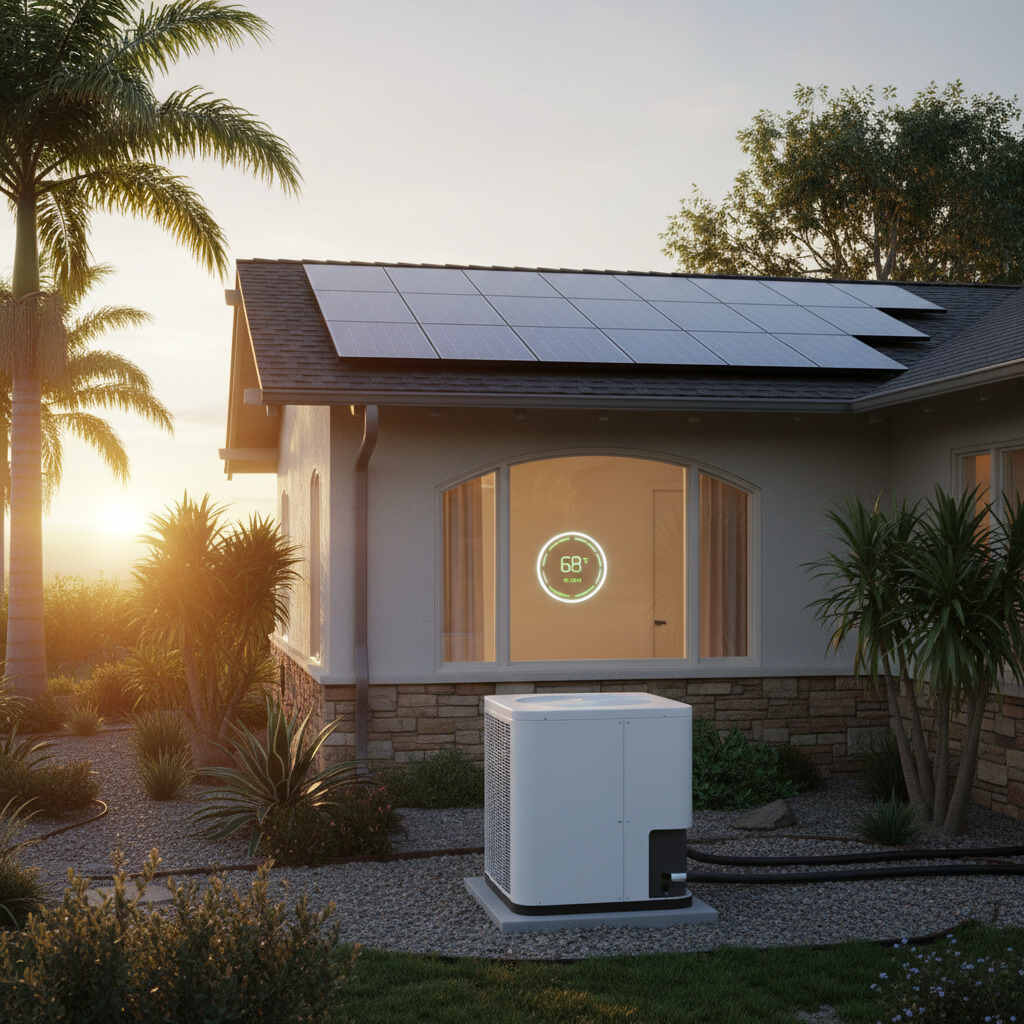
Heat pumps lay the foundation for energy-efficient cooling. Unlike traditional systems that generate heat, heat pumps simply move it using electricity with remarkable efficiency to cool or heat your home as needed.
In California’s climate, heat pumps consolidate your heating and cooling needs into one efficient system. During scorching summers, they extract heat from homes; in mild winters, they reverse the process — and with efficiency far superior to conventional systems.
These connected systems are another big leap forward in energy efficiency. Smart thermostats learn from your habits and preferences to automatically adjust temperatures for comfort and efficiency This reduces unnecessary energy output when no one’s home, trimming energy bills by 10-20%.
Watch our video guide on smart thermostat tips for Los Angeles homeowners to see how simple automation reduces waste.
Variable-speed HVAC systems bring greater precision to temperature control. Rather than the jarring on-off cycles of traditional units, these systems can run at different speeds for consistent comfort while dramatically reducing energy consumption.
Additionally, energy recovery ventilators add efficiency by capturing the energy from outgoing air. This recovered fresh air reduces the workload on your primary system while maintaining superior indoor air quality.
Modern systems equipped with MERV-13 filters simultaneously save energy and create healthier living spaces. These advanced filters capture airborne particles, from dust and microscopic pollutants, so your system also improves indoor air quality.
The SEER2 rating system provides a clear metric for comparing cooling efficiency across different units. Higher SEER2 ratings indicate greater potential for energy savings, helping homeowners make informed decisions about long-term operating costs.
For comprehensive details on energy-saving HVAC solutions that maximize comfort and reduce utility bills, visit our energy-efficient HVAC systems service page.
The federal government has taken significant steps to make energy-efficient HVAC systems more accessible, offering tax credits of up to $2,000 for qualifying heat pump installations. This reduction in upfront costs helps bridge the gap between conventional and high-efficiency systems.
California’s commitment to clean energy translates into additional financial support through programs like TECH Clean California and HEERA. These initiatives can provide up to $8,000 in rebates for income-qualified households, making zero-emission appliances accessible to a broader range of homeowners.
In Los Angeles, the Department of Water and Power further sweetens the deal with specific incentives up to $300 per ton for heat pump systems. When combined with federal, state, and local programs, these incentives can significantly reduce the initial investment in energy-efficient technology.
The rapid return on investment for these systems is compelling. With typical payback periods of 3-5 years through reduced utility bills, energy-efficient HVAC systems quickly transform a one-time expense into a source of ongoing savings.
The cost of upgrading to an energy-efficient system is more affordable than ever thanks to rebates and incentives. Our Los Angeles HVAC rebates guide shows you how to save thousands on your home upgrade with LADWP, SoCalGas, and federal programs.
Professional installation following Energy Star guidelines, which all Affordable Heating and Air techs follow, makes the difference between a system that works and a system that excels at heating, cooling, and energy optimization.
Without proper installation, even Energy Star systems can lose up to 30% of potential energy savings through poor setup.
During California’s peak cooling seasons, monthly filter maintenance is key to maintaining efficiency. Clean filters reduce energy consumption and extend system lifespan, multiplying the financial benefits of your HVAC investment.
Often overlooked, ductwork can make or break system efficiency. In forced-air systems, properly sealed and insulated ducts reduce energy loss by up to 30%—and it’s a surprisingly straightforward and affordable issue to address. Routine maintenance, such as cleaning air ducts, supports optimal system performance. Learn how often to clean air ducts in Los Angeles for peak energy savings.
Other simple adjustments can amplify HVAC efficiency. For example, the strategic use of blinds and shades to block direct sunlight reduces the cooling load on your system and enhances overall comfort by supporting effective zone cooling.
Maintaining your HVAC system regularly is crucial for sustaining energy efficiency. Learn more about our HVAC maintenance services in Los Angeles to keep your system running optimally.
Check if poor insulation is undermining your HVAC investment.
Many don’t realize it, but the simple act of setting your thermostat to 78 degrees during hot weather yields stunning savings. For every two degrees you raise the temperature, you reduce cooling costs by about 5-10%. This is often a compelling argument for acclimating your comfort zone to a slightly higher temperature.
When homeowners upgrade from older units to new systems, the impact on energy consumption can be dramatic. Depending on the age and condition of existing equipment, HVAC-related energy use often drops by 20-50%.
Text us now at Affordable Heating and Air for a detailed analysis of your potential savings.
Our experts can evaluate your home’s specific characteristics, energy usage patterns, and provide personalized cost savings estimates for energy system repairs and upgrades.
Upgrading to a high-efficiency air conditioning system can yield substantial energy savings. Learn more about our expert mini-split AC installation services to improve your home’s efficiency.
In California, the confluence of high utility costs, generous incentives, and advanced HVAC technology works in homeowners’ favor. You’re well positioned to lower your home’s carbon footprint, work toward cleaner air and green energy, and reduce your monthly energy bills.
At Affordable Heating and Air, we are dedicated to helping Los Angeles homeowners affordably navigate to greener, more cost-efficient solutions. We are committed to providing comfort and care for your home and budget through smarter solutions.
The best energy-efficient HVAC options for Los Angeles homes include variable-speed heat pumps (the most efficient single system for LA’s mild climate, providing both heating and cooling), ENERGY STAR-certified central AC systems rated 15.2 SEER2 or higher, and ductless mini-split systems for homes without existing ductwork.
Variable-speed heat pumps are the strongest choice for LA homeowners because they adjust output to match demand rather than cycling on and off, which reduces energy waste significantly during the long cooling season. LADWP rebates of up to $2,500 per ton on qualifying heat pump systems make these high-efficiency options more financially accessible.
Top energy-efficient HVAC brands for Los Angeles homes include Carrier, Trane, Lennox, Daikin, and Mitsubishi Electric. Look for models with SEER2 ratings of 16 or higher, variable-speed or inverter-driven compressors, and smart thermostat compatibility.
Variable-speed systems are particularly well-suited to LA’s climate because they maintain consistent temperatures without the energy-wasting on/off cycling of single-stage units. Mitsubishi Electric and Daikin lead the ductless mini-split market, while Carrier, Trane, and Lennox offer top-tier ducted heat pump systems.
The right brand and model depends on your home’s size, duct condition, and efficiency goals — a professional load calculation ensures proper sizing.
California requires a minimum of 14.3 SEER2 for the Southwestern region. To qualify for LADWP heat pump rebates, your system must meet at least 15.2 SEER2 with 7.7 HSPF2 — this is the baseline rebate tier. The maximum LADWP rebate of $2,500 per ton is available at 20.5 SEER2 and 9.1 HSPF2.
For most LA homeowners, systems in the 16 to 20 SEER2 range offer the best balance of upfront cost and long-term energy savings. Upgrading from a 10-year-old system rated 10 to 12 SEER to a modern 16+ SEER2 unit can reduce cooling energy use by 30 percent or more — a substantial savings during LA’s six- to eight-month cooling season.
The most impactful energy-saving HVAC solutions for Southern California homes are:
upgrading to a high-efficiency heat pump or AC system (the single largest efficiency gain),
installing a smart thermostat programmed to pre-cool during LADWP or SCE off-peak rate hours,
improving attic insulation to R-30 or higher (LADWP offers insulation rebates covering up to 80 percent of project cost),
sealing ductwork to eliminate the 20 to 30 percent energy loss common in older duct systems,
and scheduling annual professional maintenance to keep the system operating at rated efficiency.
Combined, these measures can reduce total HVAC energy costs by 30 to 50 percent.
Start with the highest-impact actions: set the thermostat to 78 degrees Fahrenheit when home and use a smart thermostat to raise the temperature when away or asleep. If your utility is LADWP or SCE, program pre-cooling during off-peak hours to shift energy use to lower-rate periods.
Change air filters every one to three months to maintain proper airflow and prevent the system from working harder than necessary. Schedule annual professional maintenance — well-maintained systems run 10 to 20 percent more efficiently than neglected ones.
Use ceiling fans to supplement air circulation, allowing a higher thermostat setting without sacrificing comfort. If your system is over 10 to 15 years old, upgrading to a modern ENERGY STAR-certified heat pump with LADWP rebates of up to $2,500 per ton is the most significant long-term savings step.