

Your air conditioner doesn’t just stop working all at once. It slowly loses efficiency week after week, running longer to keep your home cool and using more electricity while providing less comfort.
By the time you notice something is wrong, the damage has already started to add up: higher bills, worn-out parts, and a system that could break down during the next heat wave.
A professional AC tune-up can catch these problems early and fix them. At Affordable Heating and Air, our technicians improve your system’s performance by cleaning the coils, checking the refrigerant levels, tightening electrical connections, and ensuring strong airflow.
All of this is done in a single visit that takes about 60 to 90 minutes.
We start at $69 for an AC tune-up service. Care Club members receive two full system inspections per year with priority scheduling.
(818) 722-1332 — Schedule Your Tune-Up · Book Online →
Trustindex verifies that the original source of the review is Google.
Murad was extremely thorough & detailed, explained everything to my satisfaction. Very good representative for your company.The service in general was great but the job and attention from technician Edward was excellent and exceptional, he was really focus and determined not just to complete the job but to provide the best service, focused on quality, he is really professional, respectful and knowledgeable. highly recommended 👌Mr Ross was a great and very experienced technician. I am very happy with the job he has done.Trustindex verifies that the original source of the review is Google.
Came out for an inspection and a quote. Chaged $350 basically for a quote on replacing the HVAC unit that basically noted the unit was old and should be replaced. Had a few questions and asked for an additional quote only to be ignored. Quick to ask for payment but slow to respond.Great professional service. Edward and Pedro were knowledgeable courteous and professional.Murad, our HVAC technician from affordable heating and air did an excellent job! He’s very knowledgeable and thorough. Murad answered all my questions and his actions demonstrate he really cares. It was a pleasure having him take care of our HVAC system today, he told us exactly what he would do and he did it!Both installers were great. They did excellent work and they showed up early.He was very focused and thorough and got our air conditioning back on track pretty quickly. He was friendly and efficient, and our A/C has been working smoothly again for the past 36 hours.I’ve used Affordable Heating And Air in the past with great customer service. Including this time, George and Al were amazing technicians. Very knowledgeable and great guys.Service for HVAC system.Verified by TrustindexTrustindex verified badge is the Universal Symbol of Trust. Only the greatest companies can get the verified badge who has a review score above 4.5, based on customer reviews over the past 12 months. Read more
A tune-up is more than just changing a filter. It’s a careful inspection of every part that affects how well your AC cools, how efficiently it runs, and how safely it operates. Here’s what our technicians do and why each step is important for Los Angeles homes:
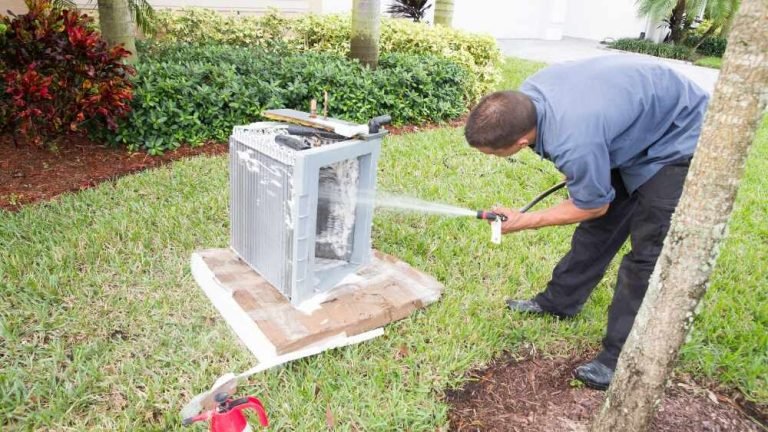
Dirty coils are the single biggest efficiency killer. A coated condenser coil cannot reject heat efficiently, forcing the compressor to run longer and harder.
In the San Fernando Valley, condenser coils accumulate dust, pollen, and Santa Ana wind debris faster than in coastal areas.
After wildfire smoke events, coils can be coated with fine ash that standard rain does not wash off. We clean both the outdoor condenser and indoor evaporator coils on every visit.
Refrigerant doesn’t evaporate or get “used up” during normal use, but even a small leak can reduce cooling and raise your energy bills.
We measure superheat and subcooling, the two readings that confirm the charge is correct, rather than just checking the pressure.
An incorrect charge is one of the most common problems we find in systems that “still run but just don’t cool like they used to.”
Capacitors, contactors, and wiring connections wear out a little more each cooling season. A weak capacitor might still start the compressor in April, but could fail on the first really hot day in July.
We test the capacitance, look for contactor pitting, and tighten all electrical connections. This is to catch parts that are about to fail before they leave you without cooling during a heat wave.
When airflow is restricted, your system has to work harder, and the evaporator coil can freeze. We check the blower motor, ensure the fan speed is correct, and measure airflow at both the supply and return vents.
In older Valley homes, small return vents or long duct runs often cause airflow problems that other service visits might miss.
The drain line can get clogged with algae and dust, especially in humid coastal areas or after windy, dusty days.
If the line gets blocked, the safety float switch will shut down your cooling, or, even worse, cause water damage to your ceilings and walls. We flush the line, treat the pan, and make sure the switch works properly.
We check that your thermostat works, ensure the system mode and fan settings are correct, and review your schedule to align with SCE or LADWP time-of-use rate windows.
We often find smart thermostats like Nest and Ecobee running at full cooling during peak pricing hours on almost half of our tune-up visits.
We document everything. You get a written summary of what we found, the current condition of your system, and any recommendations with pricing before we suggest any extra work. No surprises.
Every tune-up is handled by experienced technicians using proven methods. You can see examples of our completed AC tune-up and HVAC maintenance work portfolio.
Timing matters more than most homeowners realize.
The best time for a tune-up is between March and May. Parts are available, technicians have open schedules, and any problems can be fixed before the first heat wave.
By mid-June, every HVAC company in the Valley is busy with emergency calls, and parts can be harder to get. If you schedule a tune-up in April and we find a weak capacitor, it will cost much less than an emergency replacement in August.
After any wildfire smoke event, schedule a visit regardless of your regular maintenance timing. Smoke particulates coat coils and clog filters far faster than normal dust.
We verify filter integrity, clean coils, and assess whether your system can safely support a MERV 13 or higher upgrade. More on wildfire air quality protection →
If your system has never had professional service, now is the time to start, no matter the season. Putting off maintenance only makes things worse.
A system that runs for three or four years without a coil cleaning or refrigerant check will be much less efficient than when it was first installed.
Not every LA neighborhood punishes AC systems equally. Chatsworth, Woodland Hills, Granada Hills, Northridge, Encino, West Hills, and Santa Clarita experience summer conditions that amplify every deferred maintenance issue:
Six to eight months of continuous cooling demand. Valley AC systems log far more annual operating hours than coastal units. Every component wears proportionally faster.
Attic temperatures can go over 150 degrees. When ductwork runs through a very hot attic, the air loses much of its cooling capacity before it even reaches your rooms.
A tune-up can find duct problems and insulation issues that quietly increase your bills year after year.
Older tract homes with original ductwork. Many 1960s and 1970s Valley homes were built with duct systems and return-air sizing that, by current standards, restrict airflow. A tune-up that includes static pressure measurement identifies whether the ductwork itself is undermining system performance.
Dust, pollen, and smog accumulation. Valley air carries more particulates than coastal air, coating coils and clogging filters faster. Regular coil cleaning during tune-ups maintains heat transfer efficiency, helping keep energy bills predictable.
Our Simi Valley branch at (805) 755-4074 offers the same tune-up service throughout Ventura County. Simi Valley and Thousand Oaks experience inland heat similar to that in the San Fernando Valley.
Coastal communities like Oxnard, Ventura, Port Hueneme, and Camarillo have to deal with salt-air corrosion on condenser coil fins and electrical connections, which our coastal tune-ups are designed to handle.
For full Ventura County service details, visit our Ventura County HVAC Services page.
A tune-up is a preventive service that keeps your system running well. If our technician finds something that needs to be fixed during the tune-up, we’ll talk with you about repairs, using the tune-up results to guide the conversation.
Tune-up territory: Dirty coils, loose connections, worn capacitor, clogged drain, filter replacement, thermostat calibration, and airflow adjustments.
Repair territory: Refrigerant leak, failed motor, compressor issue, electrical fault, frozen coil root cause, condensate damage. Visit our AC repair page.
A replacement is needed if your system is over 15 years old, needs frequent repairs, uses R-22 refrigerant, or still can’t cool your home during normal summer heat even after a tune-up. Visit our AC installation page.
LADWP offers $1,000–$1,250 per ton for qualifying central ducted heat-pump replacements and $1,500–$2,500 per ton for qualifying ductless mini-split and multi-split systems that serve the entire home.
The facts are simple. ENERGY STAR says regular maintenance can make your AC up to 15 percent more efficient. Dirty coils and low refrigerant can make your AC use 20 to 30 percent more energy.
A $69 tune-up that finds a failing capacitor before it damages the compressor can save you $1,200 to $2,800 in repair costs.But it’s not just about saving money.
A tuned system runs more quietly, cools your home evenly, handles heat waves better, and lasts longer.
Systems that receive maintenance twice a year usually last 15 to 20 years, while neglected ones last only 12 to 15.
A professional AC tune-up includes cleaning the condenser and evaporator coils, verifying the refrigerant charge (superheat and subcooling measurements), testing the capacitor and contactor, tightening electrical connections, inspecting the blower motor, verifying airflow, flushing the condensate drain, calibrating the thermostat, and providing a written report of all findings and recommendations.
At least once per year, ideally in spring before the cooling season begins. Homes with heavy AC use, pets, dust exposure, or a history of wildfire smoke benefit from bi-annual service through a Care Club plan. Systems that run for six to eight months per year in the San Fernando Valley wear out faster than the national average.
At Affordable Heating and Air, AC tune-up service starts at $69. Care Club members receive two comprehensive inspections per year with filter replacement, priority scheduling, discounted repair rates, and extended warranty coverage.
Yes. A tune-up scheduled before peak summer catches failing components at standard pricing, ensures refrigerant charge is correct, and cleans coils so the system operates at rated efficiency when demand is highest. Waiting until the system struggles during a heat wave typically results in emergency pricing and multi-day scheduling delays.
A tune-up includes coil cleaning and filter inspection that directly address smoke and particulate accumulation. The technician can also assess whether your system can support a higher-MERV filter for better smoke protection and whether duct cleaning would improve indoor air quality.
Yes. Our Simi Valley branch at (805) 755-4074 serves all of Ventura County, including Simi Valley, Thousand Oaks, Moorpark, Camarillo, Oxnard, Ventura, and Port Hueneme. Visit our Ventura County page →
Each month you skip a tune-up, your AC has to work harder and cools less effectively. The coils get dirtier, the capacitor weakens, the refrigerant charge changes, and your electric bill goes up. A 60 to 90-minute visit can turn things around.
(818) 722-1332 (LA County) — Schedule Your Tune-Up Ventura County: (805) 755-4074
Book Online → · Join Care Club →
Serving Chatsworth, Northridge, Granada Hills, Porter Ranch, West Hills, Van Nuys, Encino, Woodland Hills, Glendale, Burbank, Santa Clarita, and all of Los Angeles County. Ventura County service through our Simi Valley branch.



