
If you plan to replace an air conditioner, furnace, or heat pump in Los Angeles in 2026, the rules have changed, and much of the information online is already outdated. Federal tax credits that were popular last year have expired. State rebate programs are either fully reserved or currently distributing funds. California’s building energy code was updated in January 2026, which changes how new installations must be permitted, tested, and documented.
This article explains what currently applies to your home, with clear notes on which programs are active and which are not. Rebate amounts, program status, and code details can change between publication dates, so check the details with your utility, contractor, or local permitting office before making a purchase.
California requires a 14.3 SEER2 minimum for most new split-system AC. LADWP heat-pump rebates begin at 15.2 SEER2 (with matching HSPF2) and reach a maximum of $2,500 per ton only for ductless systems at ≥20.5 SEER2 / ≥9.1 HSPF2; standard central AC is capped at $100–$120 per ton.
Four regulatory changes affect LA homeowners in 2026. The California 2025 Energy Code now applies to permits submitted on or after January 1, 2026. SEER2 minimum efficiency standards are still in place. The switch away from R-410A refrigerant continues. Federal tax credit availability has also changed a lot from what many homeowners heard last year.
Each of these changes matters for a different reason. The building code affects what your installer must do to pass inspection. SEER2 rules decide which equipment can legally be installed. The refrigerant change affects long-term repair costs for older systems. Federal credit changes affect how much money is available for your project.
The California Energy Commission’s 2025 Building Energy Efficiency Standards took effect for permit applications submitted on or after January 1, 2026. This is often called “Title 24,” and it applies to any HVAC replacement, addition, or new installation that requires a permit.
For LA homeowners replacing HVAC equipment, the practical impacts include:
Heat pump encouragement for new construction and major replacements. The code establishes heat pumps as the baseline technology in many project types, with performance and prescriptive pathways that favor electric heating and cooling.
Duct sealing and testing requirements. When ducts are changed or replaced as part of a permitted project, field verification and diagnostic testing, also known as HERS testing, may be required, depending on the compliance criteria and local rules. The exact tests needed depend on your project type, climate zone, and the compliance path your contractor chooses.
Ventilation and indoor air quality standards. New homes and major remodels must meet updated mechanical ventilation requirements. This is important for homeowners planning bigger projects or additions.
Documentation and inspection. Every permitted installation requires proper documentation, field verification where applicable, and an inspection sign-off before the project can be closed.
In practice, if your contractor is replacing your AC or heat pump with a permit in 2026, expect more paperwork and testing than three years ago. Contractors who do this work often include it as part of the job.
Contractors who skip these steps put you at risk for unpermitted work, insurance problems, and possible issues when selling your home later.
Los Angeles and Ventura Counties have experienced repeated wildfire events, most recently including the 2025 Palisades and Eaton fires in LA County and the 2025 Hughes Fire in Ventura County.
Homeowners rebuilding after qualifying wildfires may be eligible to permit certain projects under the previous (2022) California Energy Code cycle rather than the 2025 code that took effect January 1, 2026.
This exception can affect equipment selection, ventilation requirements, and the scope of documentation. Eligibility relies on the fire declaration, the project type, and the local building department’s interpretation.
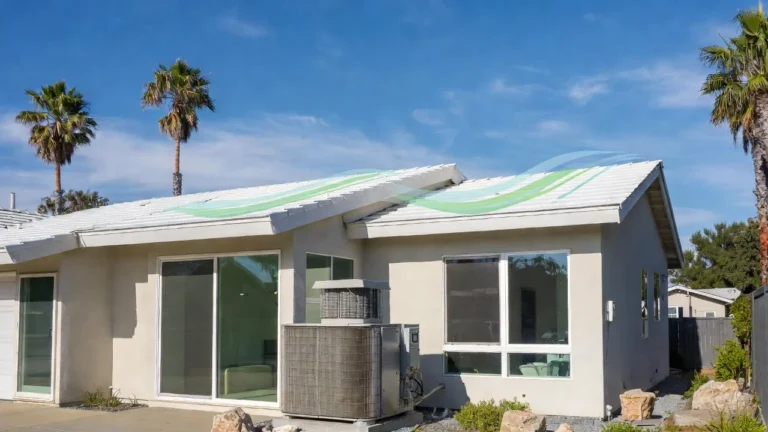
If you are rebuilding after a wildfire, confirm eligibility with your local building department and an energy consultant before getting permits. We help coordinate regulatory requirements for wildfire reconstruction projects and can explain which code cycle applies to your project.
The federal AIM Act and California’s climate regulations have driven the phase-out of R-410A refrigerant, which had been the standard in residential HVAC systems for nearly two decades. Manufacturers stopped producing new equipment charged with R-410A on January 1, 2025.
Equipment installed in 2026 uses refrigerants with lower global warming potential, mainly R-454B and R-32. Both are better for the environment than R-410A, but they are mildly flammable (A2L), so new rules apply to handling, storage, and installation. This makes it even more important to work with a licensed, EPA Section 608 certified HVAC contractor.
What this means for existing systems: If your current AC uses R-410A, it is not illegal to keep operating. Servicing an R-410A system remains possible, but recharge costs have started climbing as supply tightens. As the R-410A supply continues to decrease and prices increase over the next several years, this factor may weigh into repair-versus-replacement decisions for aging systems.
For new installations, your system will use R-454B or R-32. Installers must follow new safety rules, and the equipment is made for these refrigerants. You cannot just swap in equipment made for the old refrigerant.
This is where most people get confused. Many articles and ads still mention the federal Section 25C Energy Efficient Home Improvement Credit, which offered up to $2,000 for qualifying heat pump installations. That credit expired on December 31, 2025.
Homeowners who installed and placed in service qualifying equipment before that date may still claim the credit on their 2025 tax returns. But equipment installed in 2026 does not qualify for the federal 25C credit.
Federal energy incentive policy may change in future years. But as of this article’s publication, the federal residential energy tax credit landscape for new HVAC installations in 2026 is significantly reduced from what was available in 2024 and 2025.
California and utility rebate programs have varied program statuses in 2026. Here is what LA and Ventura homeowners should know:
The Los Angeles Department of Water and Power currently offers $1,000–$1,250 per ton for qualifying central ducted heat pumps and $1,500–$2,500 per ton for qualifying ductless mini-split and multi-split systems. Mini-split and multi-split systems must serve the entire home.
The two categories have separate efficiency tiers (from 15.2 SEER2 / 7.7 HSPF2 to 20.5 SEER2 / 9.1 HSPF2). Standard AC rebates are about $100 to $120 per ton for qualifying systems. There is also a separate rebate for smart thermostats.
SCE offers enrollment credits for smart thermostats and specific efficiency programs. Amounts and eligibility change; verify current terms directly with SCE.
Rebates for qualifying high-efficiency gas equipment are available while program funding remains
The Tri-County Regional Energy Network offers incentives for qualifying heat pump installations and energy efficiency projects throughout Ventura County. These programs are funded for 2026 and cover a range of measures for inland communities like Simi Valley and Thousand Oaks, as well as coastal areas such as Oxnard, Ventura, and Port Hueneme. Ventura homeowners can call our Simi Valley branch at (805) 755-4074 for current program details, assistance with eligibility, and project planning.
Homeowners in Simi Valley, Thousand Oaks, and Moorpark often deal with inland heat similar to that in the San Fernando Valley, which affects how heat pumps are sized and selected. In Oxnard, Ventura, and Port Hueneme, coastal salt air can shorten equipment life and influence equipment selection. In both cases, it helps to work with a contractor who knows Ventura County conditions and local programs.
This heat pump program was actively distributing incentives in 2024 and early 2025 but is currently fully reserved for single-family residential applications. Do not plan a project around TECH incentives without verifying the current status.
California’s implementation of the federal Inflation Reduction Act home electrification rebates is fully reserved with waiting list status. Do not plan a project around HEEHRA incentives.
This pattern is important. Some programs are still accepting new applications, while others have run out of funds. A good contractor checks program status every month and does not build a proposal around funds that no longer exist.
For LA and Ventura homeowners preparing to replace equipment this year, the process looks different from what it did a few years ago:
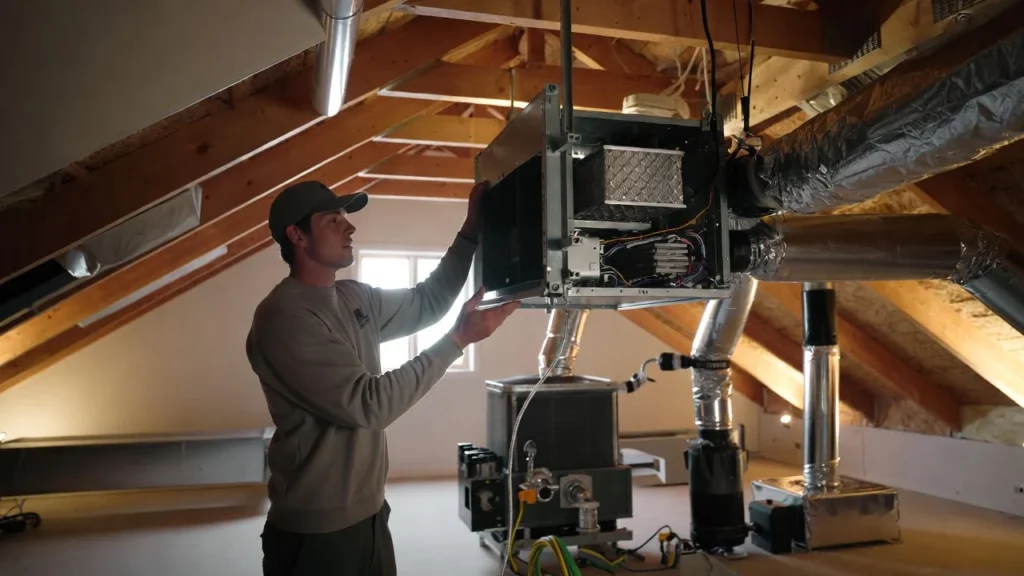
Start with a Manual J load calculation. Getting the right system size matters more than just looking at efficiency ratings. A high-SEER2 system that is too big will not work as well as a properly sized moderate-SEER2 system, and it will cost more at the start.
Check your ductwork and insulation before buying new equipment. ENERGY STAR says duct leaks can cause 20 to 30 percent of conditioned air loss. New equipment installed on leaky ducts or with poor insulation will not reach its rated efficiency. Fix these issues before or during your equipment replacement.
Get accurate rebate information, not just marketing numbers. Ask your contractor which programs your project qualifies for based on what is available now, not what was available before. If the rebate amount sounds too good to be true, verify it yourself before making a decision.
Confirm permit and Title 24 compliance. All permitted HVAC replacements require documentation, field verification testing where applicable, and inspection. This is not optional. Contractors handling this correctly build it into the project scope.
Think about choosing a heat pump instead of just replacing your AC or furnace. LADWP rebates are much better for heat pumps, and 3C-REN incentives also support heat pump projects in Ventura County. California’s rules are moving toward electrification. For most LA and Ventura homes with decent ductwork and enough electrical panel capacity, a heat pump is the better long-term investment.
California’s 2026 HVAC rules bring several changes. The 2025 Energy Code (Title 24) applies to permits submitted after January 1, 2026. This covers new installations, major replacements, and any project that needs a permit. The minimum SEER2 efficiency for new residential systems is still 14.3. R-410A refrigerant is no longer allowed, so new systems use lower-GWP options like R-454B and R-32. Federal tax credits have also changed, since the Section 25C credit ended on December 31, 2025.
New installations might cost more at first because of higher efficiency standards, revised refrigerant rules, required field testing, and Title 24 paperwork. However, rebates in the LA area can lower costs. For example, LADWP offers $1,000 to $1,250 per ton for eligible central ducted heat pump installations, and $1,500 to $2,500 per ton for qualifying ductless mini-split systems that serve the entire home.
Your total cost will depend on the type of system, your home’s condition, ductwork, and which rebates you qualify for.
For actual homeowner pricing rather than regulatory requirements alone, see our Los Angeles AC replacement cost breakdown.
For 2026, available programs include LADWP rebates of $1,000 to $1,250 per ton for qualifying central ducted heat pumps, and $1,500 to $2,500 per ton for qualifying ductless mini-split systems that serve the entire home. In addition, there are about $100 to $120 per ton for standard AC systems. SCE offers credits for installing smart thermostats, SoCalGas offers equipment rebates while funds last, and 3C-REN provides incentives for Ventura County projects.
The federal IRA Section 25C credit ended on December 31, 2025, so it does not apply to 2026 installations. The TECH Clean California and HEEHRA rebates are currently fully reserved. Be sure to check the latest program status before scheduling your installation.
California sets the minimum SEER2 for new residential HVAC systems at 14.3. This is the code minimum, but LADWP rebates start at 15.2 SEER2 and 7.7 HSPF2, with the highest rebate of $2,500 per ton at 20.5 SEER2 and 9.1 HSPF2. Most homeowners choose systems with 16-20 SEER2, since higher efficiency may save money during LA’s long cooling season.
To replace your HVAC system in Los Angeles and meet 2026 requirements, you usually follow five steps:
First, get a Manual J load calculation to size your replacement system.
Second, choose equipment that meets the code, fits your home, and qualifies for rebates. This includes deciding between a heat pump and a gas system.
Third, check your ductwork and insulation, as they affect your system’s efficiency.
Fourth, make sure you get the right permits and complete Title 24 paperwork, including field testing if needed.
Fifth, work with a C-20 licensed contractor who handles permits, installations, and compliance paperwork.
Affordable Heating and Air (CSLB #1081403) manages all permits and rebate paperwork for qualifying jobs.
California’s 2026 HVAC rules benefit homeowners who plan ahead and work with contractors who know the current requirements. The rules encourage efficiency and electrification. State and utility programs help cover a good part of project costs, and new equipment is more efficient and better suited to LA’s climate than what was common five years ago.
The biggest change this year is the federal tax credit update. If you were planning to use the 25C credit for a 2026 project, that is no longer possible. LADWP heat pump rebates are still the largest incentive in LA County, and 3C-REN is the main program for Ventura County projects.
For the current LADWP rebate structure, SEER2 tier requirements, and program details, see our California HVAC Rebates page. For repair-versus-replacement decisions on aging equipment, see our AC Installation or Heating Installation pages. For Ventura County service, permitting, and 3C-REN documentation, see our Ventura County HVAC Services page.
If you are ready to discuss a specific project, our C-20 licensed team (CSLB #1081403) handles Title 24 permitting, field verification coordination, LADWP and 3C-REN rebate documentation, and installation across Los Angeles and Ventura Counties. Call (818) 722-1332 for Los Angeles County service from our Chatsworth headquarters or (805) 755-4074 for Ventura County service through our Simi Valley branch.