
Thousand Oaks has become one of the most active heat pump markets in Ventura County.
The reasons are practical: mild winters make heat pumps operate at peak efficiency here, summer heat waves make the cooling function genuinely useful, 3C-REN rebates offset a meaningful portion of installation costs, and the Conejo Valley’s building electrification momentum means more contractors, more equipment options, and more installed systems to reference.
If you are deciding between a heat pump and a traditional furnace and AC, or if you already know you want a heat pump and need an experienced contractor, we can help. Affordable Heating and Air manages every part of your heat pump project in Thousand Oaks and the Conejo Valley from our Simi Valley office.
Our team handles system selection, equipment sourcing, installation, permits, Title 24 paperwork, and 3C-REN rebate forms from start to finish.
Local dispatch: (805) 755-4074
Posted on Google
 Renatta Corral10 days ago
Trustindex verifies that the original source of the review is Google.
Took care of business right away, Very informative, straight forward overall humble with the information and diagnostic provided; would definitely recommend this tech for services provided by affordable heating and air conditioning.+0Posted on Google Madison Christian18 days agoReplacing a heating and central air conditioner is never fun. But very pleased with Affordable Heating and Air from beginning to end. The price was fair, the communication was exceptional, they showed up when they said they would, and Humberto and Axzel who did the installation were professional, pleasant, conscientious, and knowledgeable. I would recommend Affordable to others without reservation.+0Posted on Google
 Jordan Madison21 days agoWeston was awesome. Professional and Knowledgeable. Got the A/C up and running again.+1Posted on Google
 Shannon Perry LeBeauf41 days agoA+ for Affordable Heating and Air from start to finish. I had multiple in-home estimates for mini split AC units and I’m so glad I decided to go with this company. They work hard to earn your business, meaning I received a lot of follow up estimate emails, but I chose affordable heating and air because of my technician, Benji. He was honest, thorough and extremely patient with me through the entire process. I had a ton of questions before, during and after installation and he always responded swiftly. He’s the best, and he’s funny! The company stands by their work and their service, and their pricing was reasonable and comparable to other local companies. I highly recommend them and would use them again for other home projects!+1Posted on Google
 Roya Sahafi48 days agoMauricio was a breath of fresh air during an extremely stressful time. He helped us out during an emergency call, one of our AC units went out during an extreme heat wave. He gave us valuable honest options based on our situation. Our vacation rental home being occupied with a guest and it was the during the extreme heat wave! They helped us resolve the issue on the spot ! In the end our guest was happy with the turn out and had quick AC cooling that same evening! Price was also VERY fair - especially with last minute emergency call. I called my cousin in a different state to verify and he agreed with their price, that was very fair and actually very competitive! Maurico worked very quickly during this heat wave outside under the sun and we are so grateful for him and the wonderful office team!!! Invoicing, quotes and overall communication was 10 stars service. I deal with a lot of urgent situations running vacation rentals and deal with a lot of service contractors ! So nice when they understand your situation and do what it takes to solve the issue! Picture below is before! After pic coming soon!+0Posted on Google
 Diana Chamberlain62 days agoGosh—there are so many good things I could say about Affordable Heating and Air, and it truly began with that first text message. It included a photo and let me know a technician was on the way with a personalized quote. Then Benji called to confirm—personally—that he was about 10 minutes away. I replied, “Yes, I know—and I’ll let you in since I know what you look like.” We laughed about it, but I could immediately tell this was a thoughtful, customer-first company. The moment I met Benji, his warmth and friendliness stood out right away. He genuinely wanted to understand what our family needed and what we were hoping for with our HVAC system. He was patient, thorough, and considerate—right down to being prepared with shoe covers (we’re a no-shoes household). We reviewed a few options together, talked through the pros and cons, and he even entertained one possibility that many vendors had previously told me was too expensive and not worth pursuing. Benji ultimately made that “nearly impossible” option work for us and kept everything affordable—apparently that’s not just a name, it’s how they operate. He measured carefully, walked the property, and talked through the logistics of installing a five-unit ductless mini-split system. He also made plans to remove our old rooftop packaged system. He even understood our power company’s rebate program, helping us make the “affordable” part go even further. And that was just the quote process. Benji also helped us understand the payment options, including the financing program they offer. When it came to pricing details, he even brought the owner, Donna, onto the phone so we could fully understand everything. From start to finish, everyone we encountered felt genuinely nice, respectful, and welcoming—and we never once felt pressured or overlooked. We felt comfortable, appreciated, and most importantly, heard. A few days later, Benji returned with a team that specialized in mini-splits—and they were absolutely spectacular. They were a team of four who worked together so smoothly, like a well-orchestrated performance. The entire installation was completed in a single day (though it was a long one)—there was so much done, and I was truly amazed they managed it all. And it happened just in time, right before the latest heatwave hit—today’s high was 98! Our family is thrilled with our new mini-split system. More than that, I’m genuinely grateful to Affordable Heating and Air for helping bring our vision to life—from the first thoughtful message to the final results. Thank you, and especially thank you, Benji, Donna and Davide & team, for making this such a positive experience for our home.+1Posted on Google
 Toni Broussard125 days agoJasmine was very friendly and knowledgeable of the job she was performing. She also brought to my attention, future maintenance that will be needed, before the summer begins, to keep my AC working properly. She also metioned the CARE CLUB that you have, to save me money on service calls and additional discounts. Great service. Toni Broussard+0Posted on Google
 Doris Chen128 days agoJuan truly deserves Employee of the Month recognition. He is consistently friendly, professional, and genuinely kind in every interaction. What sets him apart is his reliability and work ethic—while others may attempt the job, Juan is the one who follows through and gets it done right the first time.+2Posted on Google
 Ana Olmos154 days agoJeremy did a great job+0Posted on Google
 I am DJ Sweet P0 days agoWeston Ross was great. Very polite and professional. Great service!Verified by TrustindexTrustindex verified badge is the Universal Symbol of Trust. Only the greatest companies can get the verified badge who has a review score above 4.5, based on customer reviews over the past 12 months. Read more
Not every home is suitable for a heat pump, but many are. In Thousand Oaks, the local climate makes heat pumps an excellent choice:
Winter lows rarely drop below freezing. Overnight lows in Thousand Oaks typically range from the mid-40s to the low 50s, occasionally reaching the upper 30s. Modern heat pumps maintain full-rated capacity in this temperature range without backup heat strips or auxiliary electric assist, meaning the system operates at maximum efficiency throughout the heating season. This is materially different from cold-climate markets where heat pumps must work harder or hand off to backup heat sources.
Summer heat makes cooling important. In the Conejo Valley, July and August afternoons often reach above 95°F, and Santa Ana winds can push temperatures to 100–107°F. With this much cooling needed, a heat pump is just as useful in summer as in winter. You get two systems in one, both working most of the time.
Wildfire risk favors electric heating. Thousand Oaks sits at the wildland-urban interface. The 2018 Woolsey Fire affected multiple neighborhoods here. Electric heat pumps eliminate the combustion pathway during rebuild scenarios and reduce indoor air quality problems associated with combustion during smoke events.
New housing stock and adequate electrical panels. Many Thousand Oaks homes were built or upgraded over the past 25 years. This means their electrical systems are generally better equipped to support the increased amperage requirements of heat pumps. Panel upgrades still happen, but they are less common here than in older LA neighborhoods.
Homeowners often arrive with only a vague idea of what a “heat pump” means. Here is what is available and where each fits:
This is the cheapest option. The compressor only runs at one speed, either on or off. It works best for smaller Thousand Oaks homes with simple comfort needs and well-maintained existing ductwork.
The compressor operates at a low power most of the time and steps up to full power during peak demand. More comfortable, efficient, and quieter than a single-stage. This is the practical middle-tier choice for most Thousand Oaks homes.
The compressor adjusts its speed smoothly over a wide range, rather than turning it on and off. This gives you the most consistent temperatures, the lowest energy use, and the quietest operation. Systems with 18-20 SEER2 ratings usually use this technology and qualify for the highest rebates.
For homes without existing ductwork, home offices, ADUs, room additions, or specific problem rooms. Multi-zone systems can handle whole-home comfort without ductwork. Learn about ductless installation →
This setup combines a heat pump with a gas furnace backup. The heat pump provides heat during mild weather, which covers most winter days in Thousand Oaks. The furnace only turns on during cold spells or when you want it. This option is popular with homeowners who are not ready to switch completely to electric heating.
Most Thousand Oaks heat pump projects start with the same question: Should I replace my gas furnace and AC with a heat pump, or should I stay on gas?
Here is an honest breakdown of this market:
Case for a heat pump: One system instead of two, meaningfully lower heating operating costs in a mild climate, elimination of combustion safety concerns (carbon monoxide, gas leaks, backdrafting), qualifying rebates through 3C-REN that offset installation costs, and in accordance with California’s building electrification policy. For homeowners planning to stay in the home 8+ years, the payback math is generally favorable.
Case for staying on gas (or dual-fuel): Existing gas infrastructure that’s paid for and working, personal preference for gas heat’s specific feel, homes with electrical panels that would demand considerable upgrades to support a heat pump, or planned sale of the home within 2-3 years, where recouping the upgrade cost is uncertain.
During our estimate visit, we review the actual numbers for your home. This includes equipment costs, installation details, rebate options, required electrical work, and honest operating cost estimates. If a heat pump is not the right choice, we will let you know.
Heat pump installation is more involved than a straight furnace or AC swap. Here is what happens:
Every heat pump project we do is a turnkey installation. We take care of equipment selection and sourcing, sizing, permits, installation, refrigerant charging, commissioning, and rebate documentation. You have one contractor, one timeline, one point of contact, and one written estimate for the entire job.
Pre-installation assessment. Manual J load calculation to size the system correctly, electrical panel capacity check to confirm the panel can support the increased amperage draw, ductwork evaluation to identify sealing or replacement needs, and permit planning per Ventura County requirements.
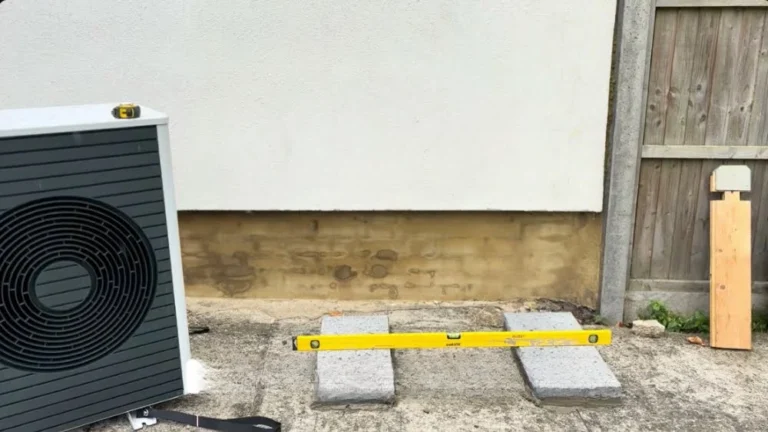
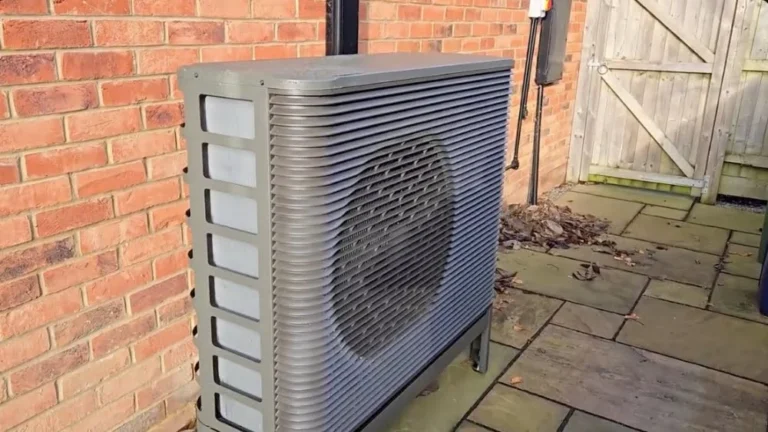
Installation day. Remove the existing furnace, AC, or both. Place the newly installed outdoor heat pump unit on a pad or wall bracket. Install an indoor air handler (or upgrade an existing one). Connect refrigerant lines, pressure-test, evacuate, and charge with the correct refrigerant (R-454B or R-32 on 2026 equipment). Complete electrical connections, set up a compatible thermostat, and run the system through a full heating and cooling cycle.
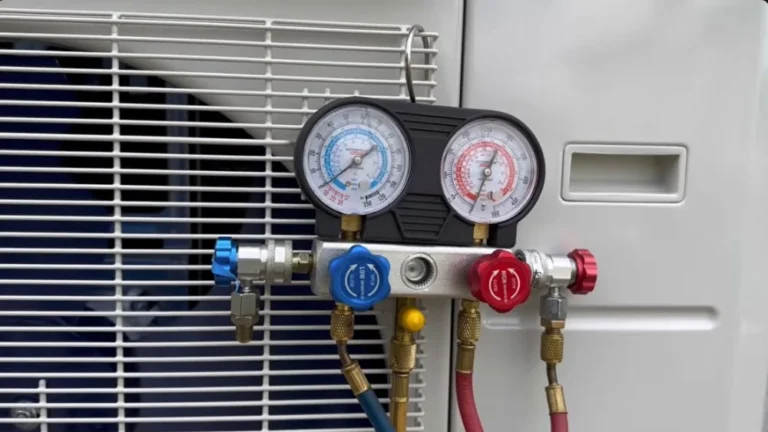
Verification and documentation. We measure airflow at every register, verify refrigerant charge with manufacturer-spec superheat and subcooling readings, calibrate the thermostat, and document the installation for permit inspection. Title 24 compliance paperwork and 3C-REN rebate documentation are handled as part of the project.
Thousand Oaks heat pump installations are completed within 1 to 2 days. The exact timing depends on the project details, whether a panel upgrade is needed, and if any ductwork changes are included.
3C-REN — the Tri-County Regional Energy Network — is the primary active rebate program for heat pump installations in Ventura County in 2026. Program details, incentive amounts, and eligibility requirements are updated regularly. We handle rebate documentation for qualifying installations.
Programs to know:
This is something to note. Some contractors still include the federal 25C credit in their quotes, but that credit expired in 2025. It does not apply to 2026 installations. A reasonable estimate should only include currently available programs.
For current rebate details, see our California HVAC Rebates page or our 2026 California HVAC Regulations guide.
Newbury Park and Westlake Village neighborhoods. Homes in these areas have adequate electrical panels and well-designed ductwork, making heat pump installation relatively simple. Wildfire smoke exposure from the 2018 Woolsey Fire and subsequent events has made MERV 13 filter compatibility a common conversation topic.
Older homes in the Conejo Valley, especially those built in the 1960s and 1970s along Ventura Boulevard, may need electrical panel upgrades and ductwork checks. This is before installing a heat pump. This can add to the project scope plus cost. However, we identify these requirements during the estimate, so there are no surprises on installation day.
Homes with existing gas infrastructure. If gas heating is currently working well and the electrical panel would need significant work to support a heat pump, dual-fuel is often the more practical path. It captures heat pump efficiency advantages during mild weather while preserving gas capacity for cold nights.
Post-wildfire reconstruction. Homeowners rebuilding after 2024 and 2025 wildfire events may qualify for the 2022 California Energy Code cycle rather than the 2025 code. This took effect on January 1, 2026. It affects equipment selection and the scope of documentation. Confirm eligibility with your local building department before finalizing your system.
Our Simi Valley office at (805) 755-4074 serves Simi Valley, Thousand Oaks and the wider Conejo Valley, including Newbury Park, Westlake Village, and Oak Park. For county-wide details, visit our Ventura County HVAC Services page. For the core service page covering our heat pump work across both counties, visit our Heating Contractor or AC Installation pages.
We have a local dispatch team in Simi Valley. Our Ventura County office is just 15 minutes from Thousand Oaks, so our response times are as fast as any contractor in the area.
Our brand credentials include a statewide C-20 license (CSLB #1081403). We are women-owned, have an A+ BBB rating. Our Simi Valley branch — the office that dispatches to Thousand Oaks — holds a 5.0 star rating from 100+ Google reviews, and our Chatsworth headquarters holds 4.9 stars from 1,500+ reviews across Los Angeles County.
We are also EPA Section 608 certified for refrigerant handling, which is critical for R-454B and R-32 equipment.
We offer honest advice about heat pumps. We install heat pumps because they are usually the most appropriate choice for most Thousand Oaks homes.
Whether it is gas or dual-fuel, the numbers work best for the homeowner. No pressure to upgrade beyond what works for you.
Replacing a ducted heat pump usually costs between $8,500 and $15,000, depending on the system size, efficiency, ductwork, and any electrical panel upgrades needed. Ductless multi-zone systems range from $7,000 to $15,000. 3C-REN rebates and other Ventura County incentives can lower your final cost. We give you a written estimate that includes all current programs for your project.
Yes. Modern heat pumps keep their full heating capacity down to 20°F. Since Thousand Oaks rarely drops below 35°F at night, your heat pump will run at or near peak efficiency all winter. You usually do not need backup heat strips or extra electric heaters. This is very different from colder climates.
In Thousand Oaks specifically, heat pumps typically cost less to operate than a comparable gas furnace for the full year. The mild winter climate favors heat pumps, as they operate at high efficiency in this temperature range. Gas is still competitive if natural gas prices drop significantly relative to electricity, but current pricing frameworks favor heat pumps in this market.
Sometimes. Heat pumps use more electricity than cooling-only systems. Homes with 200-amp panels usually have enough capacity. If your home has an older 100-amp or 125-amp panel, you might need an upgrade or a dedicated subpanel. We check this during the estimate visit, not on installation day.
We manage your entire project from start to finish. This includes assessments, sizing, equipment selection and sourcing, installation, permits, Title 24 paperwork, and 3C-REN rebate forms. You have one contractor, one estimate, and one clear point of contact. If you are thinking about switching to electric heating, we will review the real numbers for your home.
Thousand Oaks & Conejo Valley: (805) 755-4074
Serving Simi Valley, Thousand Oaks, Newbury Park, Westlake Village, Oak Park, and the surrounding Conejo Valley through our Simi Valley office. Los Angeles County service through our Chatsworth headquarters.



