

Some of the most costly HVAC problems are hidden from view. Even if your air conditioner or furnace works well, leaking, disconnected, crushed, or damaged ductwork can keep much of the air you pay to cool or heat from reaching your rooms.
ENERGY STAR says the average home loses 20 to 30 percent of its conditioned air due to duct leaks, holes, and poor connections. In the San Fernando Valley, where attic temperatures can reach 150 degrees, and ductwork faces months of extreme heat and cooling, these losses are often even higher.
Affordable Heating and Air offers duct inspections, repairs, sealing, and full replacements throughout Los Angeles County from our Chatsworth office. Our Simi Valley branch provides the same services in Ventura County.
(818) 722-1332 — Schedule a Duct Inspection · Book Online →
Trustindex verifies that the original source of the review is Google.
Javier was awesome I’m still waiting on pricing but he was very efficient in trying to diagnose the issue .The maintenance guy, Karma, was on time, helpful, gave me good advice, and cleaned both my splits. I just have to mention again that your company's pricing is so reasonable compared to my previous HVAC company, formerly a small family company that was bought out by a larger business that hopes to soak its clients with outrageous charges. From no on I am sticking with Affordable.Weston came by to repair my ac and identified the issue right away. He was professional and friendly.Very polite, thorough and pleasantExcellent service from staff that came to repair my ACEdward was excellent during my initial AC system consultation.We did an excellent job in servicing my air conditioner. You provided excellent customer service.Javier was excellent. Very thorough and professional. Explained everything to me.Steven was great! Friendly and knowledgeable. I now have insight into why our AC isn't working up to its full potential and have scheduled the solution! Thank you. Update 9/24: scheduled duct cleaning was completed by Jeremiah and I'm very happy with his service and friendliness. 10/26: Javier serviced our AC and was great!No one ever wants their AC to go out, let alone during the hottest week, but Affordable came through like champs and sent one heck of an amazing technician, Jeremy. I was able to get him to my place the same day and got the issue diagnosed, ordered the part, and had it installed as soon as they received it. He was super friendly and courteous, and for sure 10/10 recommend and will continue to use him and Affordable from this point forward. Thanks again!Verified by TrustindexTrustindex verified badge is the Universal Symbol of Trust. Only the greatest companies can get the verified badge who has a review score above 4.5, based on customer reviews over the past 12 months. Read more
Duct damage often comes without obvious warning signs. Instead, it causes problems that homeowners often mistake for other issues:
Rooms that never reach the set temperature: The AC or furnace works fine, but the air escapes through a duct leak or loose joint before reaching the room. The system runs longer, the room stays uncomfortable, and your energy bill increases.
Uneven temperatures in the house: One bedroom might be cold while another is warm, or the upstairs cools while the downstairs stays warm. This is often caused through duct distribution problems, not by equipment size.
Higher energy bills without using more: If your utility costs have increased for no clear reason, duct leaks are a common and often overlooked cause. The system runs longer to make up for lost air and uses more electricity.
Excessive dust, even with clean filters: Leaking return ducts in the attic or crawl space can pull in unfiltered air loaded with dust, insulation particles, and debris, bypassing the filter completely.
Whistling, rattling, or popping sounds: Damaged flex ducts, bent duct runs, or unsealed connections can cause turbulence and noise as air moves through ceilings or walls.
Visible duct damage in the attic: Look for crushed flex ducts, disconnected sections, torn insulation, or ducts resting on the attic insulation rather than being properly supported.
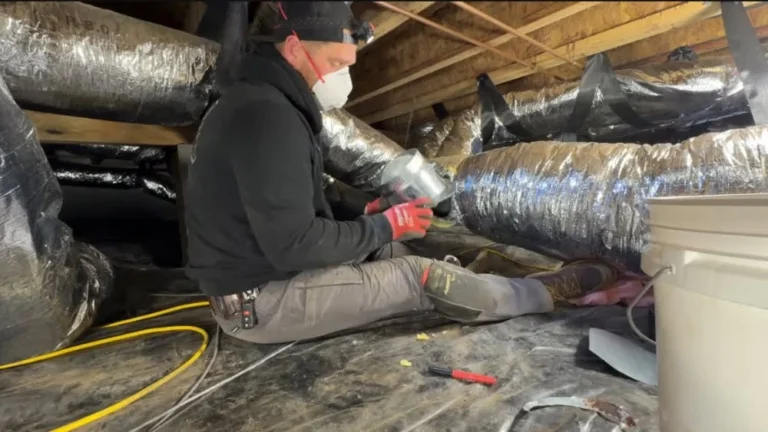
You do not always need to replace all your ducts. The most appropriate solution depends on the type and extent of the damage, as well as its location.
Duct repair fixes specific local problems without replacing the whole system:
Sealing leaks at joints, connections, and register boot using mastic sealant or code-approved tape (not standard cloth duct tape, which fails in attic heat). Reconnecting disconnected duct sections. Repairing small tears or punctures in the flex duct outer jacket and insulation. Secure ducts that have fallen off hangers or settled onto the attic insulation. Replace damaged sections while protecting the rest of the system.
Repair makes sense when the duct system is mostly in good condition, and the damage is limited to areas that can be reached and repaired.
Replacing all or part of your duct system is an excellent idea when the damage is widespread instead of limited to one spot:
The duct system is 25 to 30 years old, and the materials have deteriorated beyond repair. The flexible duct can collapse, kink, or compress over multiple runs. The existing duct size was inadequate for current HVAC equipment — a common issue in older Valley homes that have had equipment upgraded without corresponding duct modifications.
Duct insulation has degraded and crumbled, leaving bare or poorly insulated ducts exposed to attic heat. Multiple sections are leaking, disconnected, or damaged, making repair-by-repair less cost-effective than systematic replacement. You are installing updated HVAC equipment, but the existing ductwork cannot meet the airflow requirements of the new system.
When we recommend replacement, we design the replacement duct system using Manual D calculations to match your current equipment and airflow needs. We do not just copy the old layout.
Estimate your HVAC duct system's performance
Your ducts may be 40% inefficient
This means you could be losing 30% of your conditioned air through leaks and poor insulation.
*This is an estimate. Actual efficiency can only be determined by professional testing.
San Fernando Valley homes deal with duct conditions that cause faster wear and tear than most national HVAC guidelines expect:
Extreme attic heat: Ductwork in Valley attics can face temperatures over 150 degrees for months. This constant heat breaks down duct sealant, loosens connections, damages insulation, and accelerates wear on flexible duct materials. The daily cycle of hot days and cool nights can cause materials to expand and contract, leading to joint failure.
Older tract home construction: Many Valley homes built from the 1960s to the 1980s have duct systems made for the equipment and standards of that time. The first R-4 or R-6 duct insulation was fine back then, but it does not meet today’s R-8 California standards. Return air plenums were often too small, and supply runs were installed for ease of construction rather than airflow.
Rodent and pest damage: Flex ducts in Valley attics are often damaged by rodents chewing, nesting, or contaminating them. Once the outer layer is compromised, the insulation quickly breaks down, and the duct can allow contaminated attic air into your system.
Previous equipment upgrades without duct changes: Often, homeowners replace their AC or furnace with an upgraded or more efficient model, but the ductwork is not checked or updated. The upgraded equipment moves more air or operates at a pressure that the old ducts can’t handle. This leads to turbulence, noise, and reduced airflow.
Every duct service starts with an inspection to see if you need repairs, sealing, partial replacement, or full replacement.
We check every accessible duct run for leaks, disconnections, kinks, compression, and insulation conditions. We measure static pressure at the air handler to see how the system is restricted.
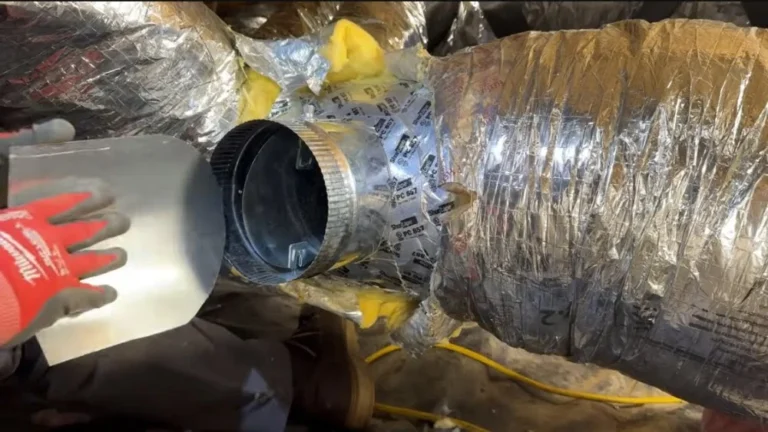
We inspect return air plenums and connections for leaks, since return leaks can be even more damaging than supply leaks by pulling in unfiltered, unconditioned air. We also check register boot connections to the ceiling or floor.
We look for duct runs that are too small, poorly routed, or unsupported, and assess duct insulation R-value and condition. Inspection results guide our recommendations. If a repair fixes the problem, we repair it.
If the duct system needs to be replaced, we present our documented findings so you can see why, rather than just giving you a sales pitch.
Ductwork connects your HVAC system. If we find duct problems while doing other services, we point them out:
During AC installation, New equipment installed on old, leaking ducts will not perform well. We check the ducts before every equipment replacement and include any needed duct changes in the project.
During AC tune-ups and HVAC maintenance, we measure static pressure and airflow. These scheduled checks often reveal duct problems before they become noticeable.
During air duct cleaning, we clear dust and debris from inside the ducts, but this does not fix any structural damage. If we find disconnected, crushed, or leaking sections during cleaning, we document them and discuss repair options with you.
During indoor air quality (IAQ) assessments, we often find that leaking return ducts are a common and overlooked cause of poor air quality. They can pull unfiltered air from the attic or crawl space straight into your home’s air supply.
During insulation upgrades, duct insulation is part of your home’s overall thermal barrier. When we improve attic insulation, fix duct insulation, and seal at the same time, we achieve the most effective results.
Our Simi Valley branch at (805) 755-4074 offers duct inspection, repair, sealing, and replacement throughout Ventura County. Simi Valley and Thousand Oaks deal with the same inland heat and attic duct stress as the San Fernando Valley. Coastal areas like Ventura, Oxnard, Port Hueneme, and Camarillo may also experience additional corrosion at metal duct connections and register boots due to marine air.
For full Ventura County service details, visit our Ventura County HVAC Services page.
We are a locally owned, women-led company. Our Chatsworth headquarters serves Los Angeles County, and our Simi Valley branch serves Ventura County. We are C-20 licensed (CSLB #1081403), A+ rated by the BBB, and have 4.9 stars from over 1,600 Google reviews. We inspect before making recommendations, document our findings, and provide honest repair and replacement options with clear cost comparisons.
Typical signs include rooms that never reach the set temperature, uneven temperatures throughout the house, rising energy bills, excessive dust despite clean filters, visible duct damage in the attic, and whistling or rattling sounds from ceilings. A professional duct inspection with static pressure measurement identifies whether the issue is localized (repairable) or systemic (replacement territory).
Duct sealing and localized repairs typically range from $500 to $2,000, depending on the number of leak points, accessibility, and duct type. Full duct replacement for an average Valley home ranges from $3,000 to $8,000 or more, depending on system size, layout complexity, and insulation requirements. We provide a written estimate after inspection.
Yes. ENERGY STAR estimates that 20 to 30 percent of conditioned air is typically lost through leaks, holes, and poor connections in the average home’s duct system. In Valley homes with attic ductwork exposed to extreme heat, the combined effect of air leakage and thermal loss through under-insulated ducts can be even higher.
Ideally, yes. New equipment installed on leaking, undersized, or deteriorated ductwork will never deliver its rated performance. Evaluating and handling duct conditions before or during an equipment replacement ensures the replacement system performs as designed from day one.
Duct cleaning removes dust, debris, and contaminants from structurally sound ducts. Duct repair fixes physical damage — leaks, disconnections, crushed sections, degraded insulation — that allows conditioned air to escape or unconditioned air to enter the system. Many homes benefit from both.
Yes. Our Simi Valley branch at (805) 755-4074 serves Simi Valley, Thousand Oaks, Moorpark, Camarillo, Oxnard, Ventura, and Port Hueneme. Visit our Ventura County page →
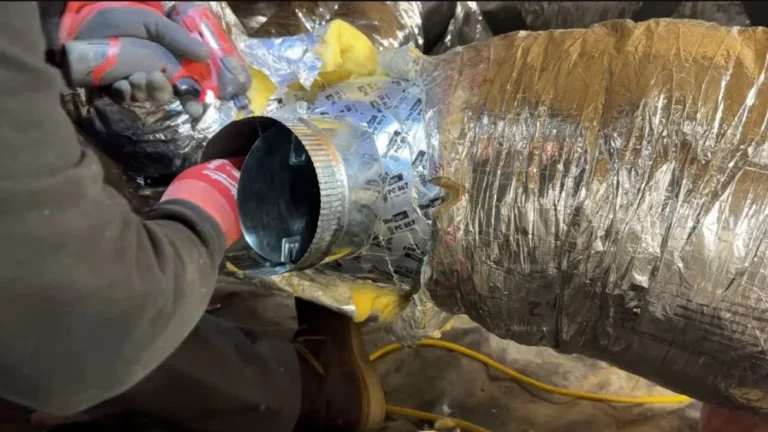
If your rooms do not reach the right temperature, your bills keep rising, or you see damaged ductwork in the attic, the problem is probably in the ducts between the equipment and the rooms, not the equipment itself. We inspect, document, and give you honest options.
Los Angeles County: (818) 722-1332 Ventura County: (805) 755-4074
Serving Chatsworth, Northridge, Granada Hills, Porter Ranch, West Hills, Van Nuys, Encino, Woodland Hills, Glendale, Burbank, Santa Clarita, and all of Los Angeles County. Ventura County services through our Simi Valley branch.



