

Many homeowners wonder the same thing: “How long should an AC last before replacement?”
Most air conditioners last fifteen to twenty years if the weather is mild, maintenance is regular, and conditions are steady. But in Los Angeles County, how long an AC lasts can really vary.
Southern California’s environment affects the reliability of AC systems. Coastal areas have salty air, which speeds corrosion. Valley neighborhoods get very hot in summer. Inland areas often have more dust and larger daily temperature changes.
Because of these factors, two identical AC units installed at the same time might wear out at different times. Knowing what affects how long your system lasts can help you make better choices about maintenance and replacement.
In normal conditions, a central AC system should last about 15 to 20 years, as long as it’s installed properly and receives regular maintenance.
Basic AC units usually last about 10 to 15 years because they have simple parts and wear out faster if used a lot. High-quality systems can last 20 years or more, especially if they use good components and are well maintained.
But the climate and how often you use your AC can change these numbers. Homes that need year-round cooling, especially during heat waves, strain the system. Salt in coastal air or dust inland can also make AC units wear out faster.
If you live in Los Angeles County, understanding these environmental factors is the first step toward understanding how long your AC lasts.
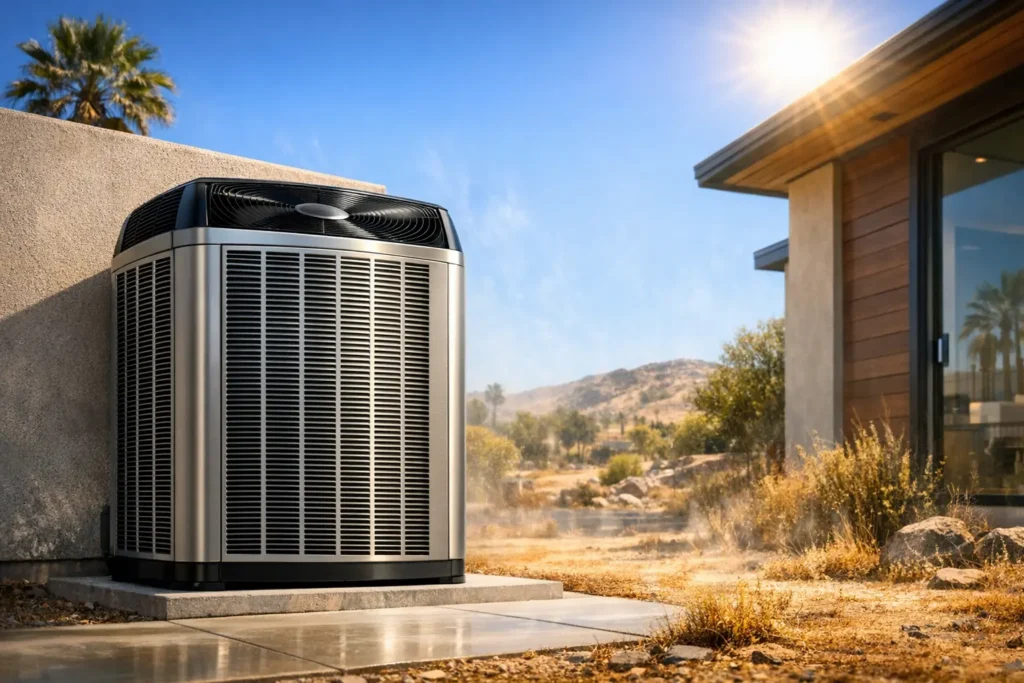
Los Angeles County has many microclimates, each with its own challenges for AC systems.
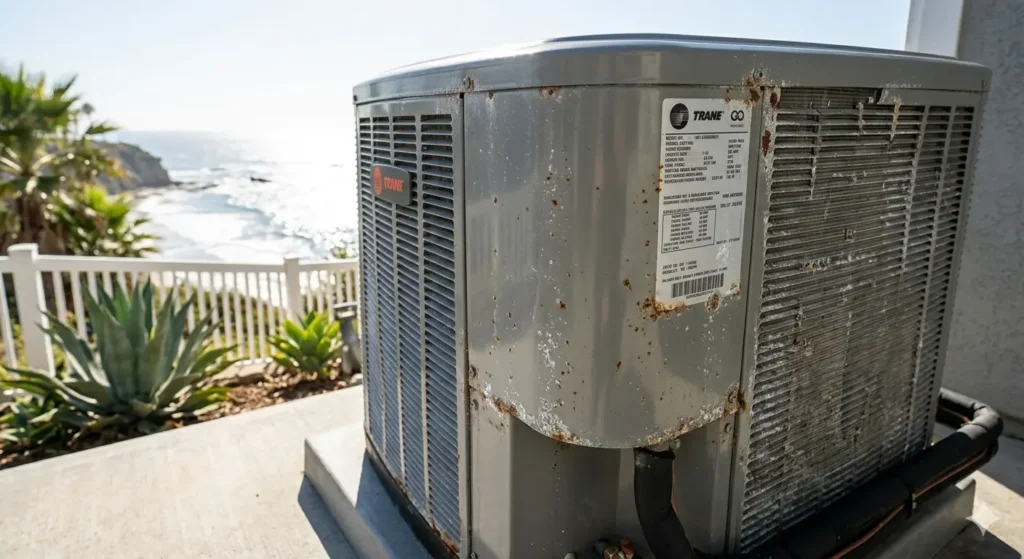
Homeowners near the coast often see their AC equipment wear out faster. Ocean air brings in tiny salt particles that settle on outdoor coils and metal parts. Over time, this salt accelerates corrosion and weakens the coils, electrical connections, and other components inside the outdoor unit. For systems installed within a few miles of the ocean, the AC unit’s lifespan in a coastal climate can be shortened by several years. This is if the equipment is not protected or regularly cleaned.
Homeowners near the coast can help their AC last longer by having the coils cleaned more often and getting regular professional inspections.
The San Fernando Valley and San Gabriel Valley get some of the hottest weather in Los Angeles County. During summer heat waves, AC systems may run nonstop for long stretches.
Running for long periods can wear out compressors, fan motors, and electrical components. AC units in these hot areas rack up more hours than those in cooler places.
Even though heavy use doesn’t always make an AC wear out faster, it makes regular maintenance and proper airflow even more critical.
Inland communities often experience more dust, which accumulates on filters and condenser coils.
When dust blocks airflow, the AC has to work harder to cool your home! Over time, this extra strain wears parts faster.
Simple habits like changing filters regularly can really help your AC last longer.
Regular maintenance is one of the most effective ways to help your AC last longer. It keeps the system running smoothly and stops small problems from turning into big repairs. Even minor issues, like loose wires or low refrigerant levels, can slowly damage the parts inside. Routine checkups keep airflow steady, protect the compressor, and let technicians spot worn parts before they break.
Getting your AC checked by a professional once a year helps catch problems early. Technicians inspect key components, clean the coils, check the refrigerant levels, and ensure all electrical components function properly. Regular service is one of the most effective ways to help your AC last longer. Many systems that last twenty years have had steady care the whole time.
You can protect your AC by regularly changing its air filters. If a filter gets clogged, the blower’s motor and compressor have to work harder than they should.
Keeping the outdoor unit free of leaves, dust, and dirt helps your AC run better. These small steps will reduce strain and help your system run smoothly, especially during hot weather.
Regular professional tune-ups are one of the most effective ways to push your AC toward the upper end of its 15–20 year lifespan in Los Angeles County’s climate. Schedule an AC tune-up in Los Angeles to keep your system running efficiently year after year.
Even if you take proper care of your AC, it will eventually age. Spotting these signs early lets you plan before a major breakdown.
If your energy bills are increasing, your AC might be losing efficiency. As parts wear out, the system uses more electricity to keep your home cool. Frequent repairs are another warning sign. If you’ve been calling for service for more than 10 years, your AC may be nearing the end of its life.
If some rooms aren’t cooling, your AC might not work as well as it should. This could mean the compressor is weakening or there’s an airflow problem. Strange noises, such as grinding or squealing, should be checked right away, as they often indicate that something is wearing out inside the motor or bearings. Spotting these signs early can help you decide when to replace your AC in Los Angeles. This is so you don’t break down during a heat wave.
It can be tough to decide whether to repair an old AC or replace it. A few key factors can help you make that choice.
If your AC is less than 10 years old, repairing it usually makes sense. Most parts still have a lot of life left, and one repair can often get it back up and running.
For AC units older than ten to twelve years, it’s a different story. You’ll want to compare repair costs with the price of upgrading your system and consider how long your current one might last.
A common rule is to multiply the repair cost by your AC’s age. If the total exceeds $5,000, replacing the system might be a better long-term choice.
For example, if your 15-year-old AC needs $1,000 repair, that adds up to $15,000. In this situation, upgrading the system could improve its reliability and efficiency.
Energy savings matter too. New ACs are much more efficient than older ones, so lower electricity bills can offset some installation costs over time.
Once replacement starts making more financial sense than another repair, review our 2026 AC replacement pricing in Los Angeles to understand what a new system may realistically cost.
Modern AC systems have come a long way thanks to new technology. Many now use variable-speed compressors that adjust to the amount of cooling you need, rather than turning them on and off all the time. This smooth operation puts less stress on the system and keeps your home comfortable.
High-efficiency systems also remove heat faster. When your system cools the house faster and keeps the temperature steady, it doesn’t have to work as hard in extreme weather. Many updated systems also feature smart diagnostics that spot problems early, allowing technicians to fix them before they become serious issues.
Thanks to these improvements, if you replace your old AC now, you’ll likely enjoy better comfort and a longer-lasting system.
In Los Angeles County, a central AC unit that gets regular care usually lasts 10 to 15 years. Some newer, high-quality systems can last up to 15 or even 20 years if you take good care of them. However, frequent use during mild winters and hot summers, along with challenges such as coastal salt, valley heat, and dust, can make AC units wear out faster than the national average. Getting your system professionally serviced regularly is the best way to help it last as long as possible.
In coastal parts of Los Angeles like Santa Monica, Venice, and Long Beach, salty air can cause outdoor AC parts to rust faster. Without extra protection, AC units in these areas often last only 8 to 12 years. If you regularly clean the coils, apply protective coatings, and have yearly inspections, your unit could last 12 to 15 years. Units without protection near the ocean usually need to be replaced sooner than those farther inland.
In hotter inland areas like the San Fernando and San Gabriel Valleys, AC units often run for long periods during heat waves and hot summers. This puts extra stress on parts like the compressor and motor, so these units usually last about 10 to 15 years. With good maintenance, some can last over 15 years, but running nonstop in temperatures over 100°F wears them out faster than in cooler coastal areas.
Dust, which is common during Santa Ana winds, can clog filters, condenser coils, and airflow paths. This makes your AC work harder, lowers its efficiency, and wears out parts like the blower motor and compressor faster. When you add in the intense heat in the valleys, the system faces even more stress, which can shorten its life by several years and increase your energy bills. Regularly changing filters and cleaning coils can help prevent these problems.
To help your AC last as long as possible in Southern California’s tough climate, try these tips:
Following these habits can add 5 or more years to your AC’s lifespan and help you avoid breakdowns on the hottest days. For advice that fits your home, reach out to a local professional for an inspection.
Knowing how long an AC should last in Los Angeles helps you plan. However, it depends on factors like the climate, how well you maintain it, and the system’s quality.
ACs last fifteen to twenty years, but taking care of yours can help it last longer. Regular checkups, clean coils, and proper airflow all reduce wear and tear. Knowing when to replace your system can also save you from constant repairs and higher energy bills.
Planning is especially critical in Los Angeles County, where heat waves can hit fast. Replacing your old AC before it breaks down can make installation easier and avoid an emergency.
If you want help knowing what to do with your current AC, a professional inspection can help. Technicians can check your system, estimate how much life it has left, and suggest the most effective options to keep your home comfortable.
If you have questions about your AC or want to book a seasonal tune-up, contact Affordable Air and Heating. You can schedule an appointment or talk to a real person ready to help.
Your comfort should always be reliable, especially during the hot months in Southern California. With the right care and smart choices, you can keep your home cool for years.