

Los Angeles residents depend on air conditioning to stay comfortable during hot summers. As temperatures rise, your AC works overtime to keep your home cool. This leads many homeowners to ask a straightforward question: “Does attic insulation help my AC work better?”
Yes, often. Insulation above your ceiling has a big impact on how much effort your AC needs to keep your home cool. If the insulation is thin, old, or poorly installed, heat can easily transfer from the attic into your living space. This means your air conditioner has to keep removing that extra heat over and over.
Attic insulation acts as a barrier between your roof and your home, slowing down the transfer of heat. This helps your air conditioner to keep things comfortable without working as hard. Many people who ask about attic insulation hope to lower their energy bills and feel more comfortable at home. Here’s how attic insulation affects your AC and what you can do to improve things.
Los Angeles homes have uneven cooling. The downstairs might feel comfortable, but the upstairs bedrooms often feel warmer.
This happens because heat rises and collects near the top of your house. Meanwhile, the attic soaks up strong sunlight all day. Without proper insulation, heat moves down into rooms below.
This creates a constant cycle. Your thermostat signals the AC to cool your home, but heat from the attic keeps coming in. As a result, your air conditioner runs longer to keep up.
That’s why many homeowners wonder if better attic insulation can help their AC work less. Improved insulation slows heat flow from the attic. When this happens, indoor temperatures stay more stable, and your cooling system doesn’t have to run as often.
Cooling your home in Southern California can get expensive during the summer. Electricity prices keep rising, and air conditioners use energy. When people ask if attic insulation helps their AC, they’re often hoping it will lower their energy bills.
The link is simple. When heat comes in through the attic, your AC has to run longer to keep your home at the right temperature. The longer it runs, the more electricity it uses.
With enough insulation, less heat from above gets into your home. Your AC can cool things down faster and turn off sooner. This shorter runtime leads to real savings over time.
In many homes, adding more attic insulation will significantly reduce cooling energy use. The exact savings depend on your home’s age, current insulation, and AC system efficiency.

If you’re looking at insulation upgrades, you’ll probably hear the term “R-value.” Knowing the R-value of attic insulation in California can help you determine what your home needs.
The R-value measures how well insulation blocks heat transfer. A higher number means insulation slows down heat.
California’s building codes now require higher attic insulation levels than those required for older homes. Many houses built years ago have insulation that doesn’t meet today’s efficiency standards.
For most homes, California recommends attic insulation with an R-value of at least R-38. If your insulation is below this level, you’ll likely notice higher cooling costs and less steady indoor temperatures.
Bringing your insulation up to these levels can make your home more comfortable and reduce the strain on your AC system.
Most people don’t think about insulation until they have comfort issues. There are a few common signs that your attic insulation might not be performing as it should.
If your AC runs almost nonstop on hot afternoons, your insulation might not block enough heat from the attic. When the cooling system rarely turns off, it struggles to keep the room above it cool.
Large temperature differences between floors can also indicate insulation problems. If your upstairs rooms always feel warmer, even when the AC is on, heat from the attic could come through the ceiling.
High summer electricity bills indicate another sign. If your cooling costs are rising faster than you expect, it might be time to check if better insulation could lower your bills.
You can even touch your ceiling on a hot afternoon. If it feels warm, that’s a sign that heat is moving from the attic into your home.
Air conditioners are designed to remove heat from your home’s air, not to constantly fight heat from a hot attic. If your insulation isn’t enough, your AC has to work harder to keep things comfortable. This can wear out parts like compressors and fans faster.
With better insulation, your cooling system can work as it should. Less heat comes in, so your AC can reach a set temperature more easily and run on normal cycles. This usually means quieter operation, steadier temperatures, and a more comfortable home.
If you’re wondering whether attic insulation helps your AC, the main benefit is that your system won’t have to run constantly to keep up with the heat.
Attic insulation is just one part of your home’s energy efficiency, but it’s one of the most effective upgrades you can make.
Homes lose and gain heat through the attic because the roof gets direct sunlight all day. If insulation is lacking, heat moves into your living areas. Adding more insulation reduces heat transfer and boosts your home’s efficiency.
Often, you’ll get the best results by combining insulation upgrades with HVAC maintenance and better airflow. Sealing ducts, tuning up your AC, and using efficient equipment all work together with insulation to make your home more comfortable.
When all these systems work together, you’ll often notice real savings from attic insulation and better cooling throughout your home.
There are several types of insulation that work well in Southern California homes. Fiberglass, blown-in cellulose, and spray foam each have their own benefits, depending on your attic’s layout and current condition.
Fiberglass batts are popular because they’re affordable and easy to find. Blown-in insulation fills odd-shaped spaces and covers the attic. Spray foam offers the highest heat resistance per inch and can also seal up air leaks. The right insulation choice depends on your home’s construction, how much insulation you already have, and your attic’s ventilation. A professional can help you decide which upgrade will deliver the most desirable results for your budget.
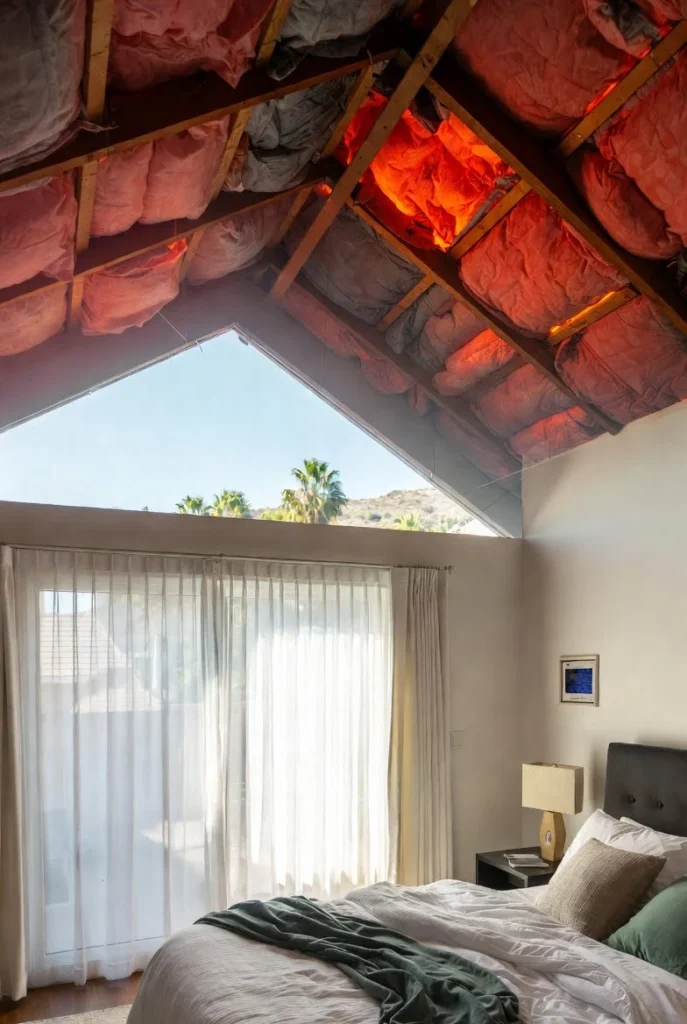
Yes. In Los Angeles, attic insulation acts as a thermal barrier, keeping intense roof heat out of your living spaces. Without insulation, your AC has to work much harder to remove that extra heat. Good insulation can reduce heat gain through the attic, which can account for up to 40% of cooling loss. This lowers the overall cooling load and helps your AC run more efficiently, especially during hot Southern California summers.
Yes, often by a significant amount. Adding sufficient attic insulation slows the flow of heat from your sun-baked roof into your living space. This helps your AC reach the set temperature faster and turn off sooner, rather than running continuously. Many Los Angeles homeowners see their AC run 20 to 30% less, depending on existing insulation levels, home size, and system efficiency. Shorter runtimes also extend equipment lifespan.
Most Southern California homeowners save 10 to 30% on cooling bills, and some report up to 45% less cooling energy use after upgrading from poor or missing insulation. LADWP estimates savings of up to $374 per year depending on home size and location. The typical payback period is 3 to 7 years through lower electricity bills, available rebates, and longer AC system life. The largest savings are seen in older homes with inadequate existing insulation.
California Title 24 recommends R-38 or higher for most attics in Los Angeles and Southern California. Many experts recommend R-49 for maximum efficiency, especially if your home has attic ductwork. Older Los Angeles homes often have R-19 or lower, so upgrading can significantly improve comfort and reduce bills. A licensed insulation contractor can assess the correct level for your home and climate zone.
Yes, this is one of the most common causes of uneven temperatures in Los Angeles homes. In LA, attics can reach 140 to 150 degrees Fahrenheit on sunny days. Poor or thin attic insulation allows that heat to move quickly through the ceiling into upstairs rooms, causing significant temperature differences between floors. Even with the AC running, upstairs bedrooms can remain 5 to 10 degrees warmer. Proper insulation stops this heat transfer and helps maintain consistent temperatures throughout the home.
Los Angeles homes face unique cooling challenges due to the long, sunny seasons and warm afternoons. Attic spaces can become extremely hot, especially during the peak summer months.
When people ask if attic insulation helps their AC, they’re usually dealing with real comfort issues. If some rooms never cool down, your AC runs all day, or your energy bills keep rising, your home might be losing efficiency.
Upgrade your attic insulation. It tackles these problems at the source by keeping heat out of your home. For many people, this simple change helps keep indoor temperatures steady, lowers energy bills, and makes your AC’s job easier.
If you’re looking for ways to make your home more comfortable or improve your AC’s performance, learning about insulation and energy upgrades is an excellent place to start.
To learn more about making your home more comfortable and energy-efficient, contact Affordable Heating and Air or book an appointment to talk with someone who understands what Southern California homeowners need.