
Many homeowners upgrade their insulation or add smart thermostats individually. Both upgrades are helpful, but you get the most effective results when they work together.
Insulation affects how fast the heat moves into or out of your home. A smart HVAC system manages how well your heating and cooling equipment reacts to those changes. When both systems work together, your home stays more comfortable and uses energy more efficiently.
If you are looking at smart insulation and HVAC options in Los Angeles, it helps to know how they work together. The right insulation means your HVAC system works less hard. Smart controls ensure the system runs only when needed and efficiently.
This combination keeps your home comfortable while using less energy, running the system less often, and helping your equipment last longer. Keep reading to see how these upgrades can really help.
Insulation protects your home. It slows heat transfer between the inside and the outside. If the insulation is weak or patchy, heated or cooling air escapes easily. In summer, hot air can get into your walls, ceilings, and attic, so your HVAC system has to run longer to keep things comfortable.
Upgrade your insulation to retain heat. With proper insulation, you will need less heating and cooling overall.
Having proper insulation is a big help when adding smart climate technology. In homes with strong insulation, temperatures change more slowly and more predictably. Smart systems can work accurately and efficiently.
If your insulation is not good enough, even the most efficient thermostat will have to keep working to make up for the heat coming in or leaving out all the time.
Today’s smart HVAC systems do more than follow a set schedule. They learn about your daily routines, monitor indoor conditions, and automatically adjust heating and cooling. These systems use sensors to gather information and improve over time. They can tell you when someone is home, how fast rooms heat up or cool down, and when the weather outside changes.
Rather than simply switching on or off, smart systems adapt their behavior based on what is happening now.
Smart systems also send alerts when maintenance is due. They can remind you to change filters, warn you about airflow issues, or let you know if something isn’t working right. This helps you fix small issues before they become significant ones.
When you combine smart technology with effective insulation, the result is even better. Stable temperatures mean your HVAC system can keep you comfortable with shorter and less frequent cycles.
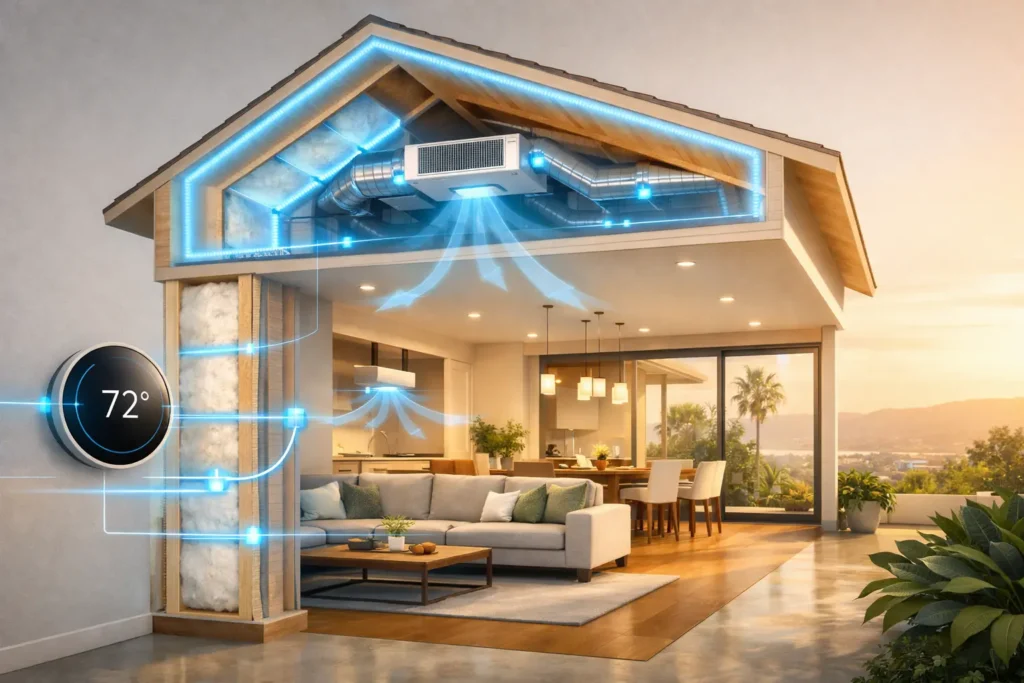
You will achieve the highest energy efficiency through layering improvements. Each upgrade enhances the next.
Insulation is the first step; it reduces energy needed to keep your home comfortable. Smart HVAC controls are the next step; they help your heating and cooling systems operate more efficiently. When you combine both, you get better results than you do with either alone.
Homes with effective insulation experience a slight temperature variation. Because things are more stable, smart HVAC systems only need small adjustments rather than big ones.
This puts less strain on your system, helps it last longer, and keeps your home comfortable all day.
Smart HVAC systems automatically manage energy use. They adjust their settings based on what is happening in your home. For example, a smart thermostat might use less cooling when no one is home, then bring the temperature back to normal before you return.
These automatic adjustments work even better in homes with superior insulation. Since heat moves slower, your home stays at the right temperature for longer.
This stability lets your HVAC system run less often while still keeping you comfortable.
Over time, this automatic system can reduce your energy use and keep your home’s temperature consistent.
Homes in Los Angeles County are subject to many weather conditions. Coastal areas often have cooler air and higher humidity, while inland areas receive more sunlight and experience hotter summers. This means homes in different parts of the region have different cooling needs.
For example, homes in the San Fernando Valley often need longer cooling times during summer heat waves. Coastal homes might not experience large temperature swings, but they still need proper humidity and airflow control.
Smart HVAC systems can adjust automatically to these changing conditions. With proper insulation, they respond even better to outdoor temperature changes. This combination keeps your home comfortable without running the system constantly.
You do not always need a full renovation to improve insulation. Many homes get remarkable results from upgrading just a few key areas.
Attics are usually the most effective place to start, since heat rises and poorly insulated attics waste energy. Wall spaces, crawl spaces, and ductwork also matter for efficiency. Air leaks around windows and doors can reduce temperatures.
Fixing these areas provides your home with a solid foundation for smart HVAC controls to work well.
You will get better results if you plan insulation upgrades and smart climate technology together rather than separately.
If you are considering smart HVAC upgrades, check whether they are compatible with your current equipment. Some systems fit right in with modern HVAC units, but others may require additional parts.
Learning thermostats is a popular way to start with smart climate control. They watch your daily habits and adjust the schedule for you. Multi-room sensors are also useful because they track temperatures in different parts of your home, not just where the main thermostat is.
With more data, the system can respond more effectively to temperature changes across different rooms.
Smart airflow controls can also help large homes save energy. They direct air to different areas based on where people are and what feels comfortable to them. When set up right, they let your HVAC system focus on heating or cooling where it is needed most.
A common mistake is adding smart HVAC technology without fixing insulation gaps.
If your insulation is weak, your HVAC system has to work harder to compensate for heat transfer through walls and ceilings. Even the most advanced technology cannot fix a poorly sealed home.
Another common problem is where sensors are placed. If thermostats are near windows or in direct sunlight, they might not get accurate readings.
Having a professional install your system ensures sensors measure the actual indoor climate, not just hot spots from sunlight.
Air sealing matters too. Small gaps around doors, vents, and ducts let heated or cool air escape. Sealing these spots improves insulation and helps your HVAC system run efficiently.
Fixing these problems early helps your whole system work smoothly.
Energy efficiency technology improves constantly. The latest systems combine smart climate control with tools that predict your energy needs.
Some smart systems already use weather forecasts to run your HVAC. If a hot day is on the way, the system can start changing early, keeping your home comfortable and saving energy.
Artificial intelligence makes home heating and cooling smarter. These systems learn how your home performs over time and automatically adjust their operation.
As these technologies get better, homes with superior insulation and smart HVAC systems will benefit the most.
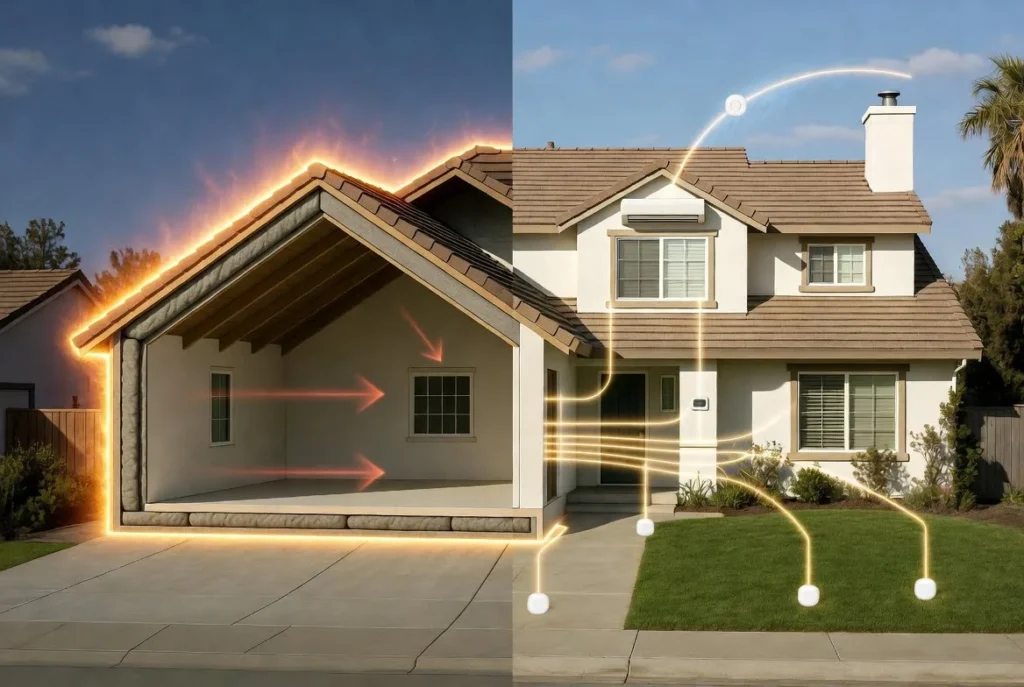
Yes. Quality insulation slows heat from entering or leaving your home. This means your smart HVAC system and thermostat do not have to adjust as often or run for as long. As a result, you use less energy, stay more comfortable, and your smart controls work more efficiently — managing a stable indoor environment rather than constantly compensating for heat loss or gain through poorly insulated walls and ceilings.
Start with insulation, especially in the attic and walls. The right insulation keeps your home temperature steady, so your smart HVAC system and thermostat can operate more accurately and less frequently. If you add smart technology without addressing insulation first, you will not capture the full efficiency gains or energy savings that both upgrades are capable of delivering together.
Homeowners typically see heating and cooling bills drop by 20 to 40 percent when combining upgrades. Attic insulation alone can save up to $374 per year on cooling costs in Los Angeles according to LADWP estimates. Pairing that with smart HVAC controls reduces energy use further, especially during summer heat waves when the system would otherwise run continuously.
Coastal homes, which tend to be milder and more humid, benefit from spray foam or fiberglass insulation with proper air-sealing to manage moisture. Valley homes — which experience more extreme heat and larger daily temperature swings — do best with high-R-value attic insulation (R-38 to R-60) and radiant barriers to block intense sunlight.
Both configurations work well with smart HVAC systems to maintain consistent temperatures and reduce runtime.
Yes. LADWP offers rebates for qualifying attic insulation upgrades and up to $2,500 per ton for qualifying heat pump HVAC systems. SoCalGas offers rebates on qualifying high-efficiency gas appliances and insulation measures while funding lasts. SCE offers a $75 bill credit for qualifying smart thermostat enrollment. Note: the federal IRA Section 25C tax credit for air-source heat pumps expired December 31, 2025 and is not available for 2026 installations. TECH Clean California single-family rebates are currently fully reserved. Verify current program availability with your utility before scheduling work. Affordable Heating and Air handles rebate paperwork for qualifying installations.
Making your home efficient is not about one upgrade. Comfort, reliability, and saving energy all come from different systems working together.
Insulation makes your home better at keeping the heat in or out, so you use less energy. Smart HVAC controls help your heating and cooling equipment operate more efficiently. Together, these upgrades make it easier to stay comfortable and conserve energy.
If you want to make your home more efficient, have a professional check your insulation and HVAC system. This helps you identify which upgrades will deliver the most effective results.
If you want to boost your home’s energy efficiency, contact Affordable Heating and Air for a free quote and consultation. Set up an appointment to find solutions that will keep you comfortable for years to come.
With careful planning and the right mix of insulation and smart HVAC technology, you can change how your home stays comfortable year-round.