
Americans spend roughly 90% of their time indoors, yet few realize that the air inside their homes often contains two to five times more pollutants than the air outside. Invisible contaminants produce symptoms misattributed to allergies, stress, or viral infections.
LA homeowners face unique challenges: pollution, wildfire smoke, and old HVACs creating persistent health issues.
This article explores warning signs of poor indoor air quality, physical evidence to look for, and how professional testing and HVAC maintenance can protect respiratory health.
Key takeaways
Many telltale signs indicate your home’s air quality could make you sick.
Coughing, wheezing, and shortness of breath that improve once you step outside your front door are not coincidences. Your indoor environment causes respiratory distress, and improved symptoms are a clear indication that your home’s air quality needs immediate attention.
Pay attention in the morning. Waking up with sinus pressure and congestion that gradually improves throughout the day suggests overnight allergen exposure. Dust mites in bedding and carpets become particularly active overnight, with hidden colonies releasing spores that circulate through poorly ventilated bedrooms.
Asthma sufferers typically know their triggers, but attacks and inhaler usage occurring more frequently at home point to poor air quality there.
Respiratory infections that occur unusually or last beyond regular recovery periods may also stem from poor-quality air carrying pathogens.
HVAC systems without proper maintenance can become distribution networks for bacteria and viruses, cycling contaminated air through every room.
That scratchy, irritated throat that develops after cleaning the bathroom or spending time in recently renovated spaces? Volatile organic compounds from household products, new furniture, and building materials can release chemical vapors that irritate throat tissues.
There are other non-respiratory warning signs as well.
Headaches develop predictably after several hours at home. Carbon monoxide from malfunctioning appliances or volatile organic compounds from pressed wood furniture or synthetic carpeting can trigger recurring headaches that improve outdoors.
Cognitive function depends on adequate oxygen and clean air. When indoor pollutants displace breathable air or tax your body’s systems, fatigue and concentration difficulties can emerge despite sufficient sleep. Your brain works harder to process information while your body diverts resources to managing inflammatory responses.
Rashes, persistent itchiness, or unexplained dryness appearing primarily at home may indicate contact with airborne chemical irritants or allergens in your indoor atmosphere.
High concentrations of airborne particulates in bedrooms can disrupt breathing patterns during rest, preventing deep sleep cycles.
Sometimes there are obvious, visible signs in your home.
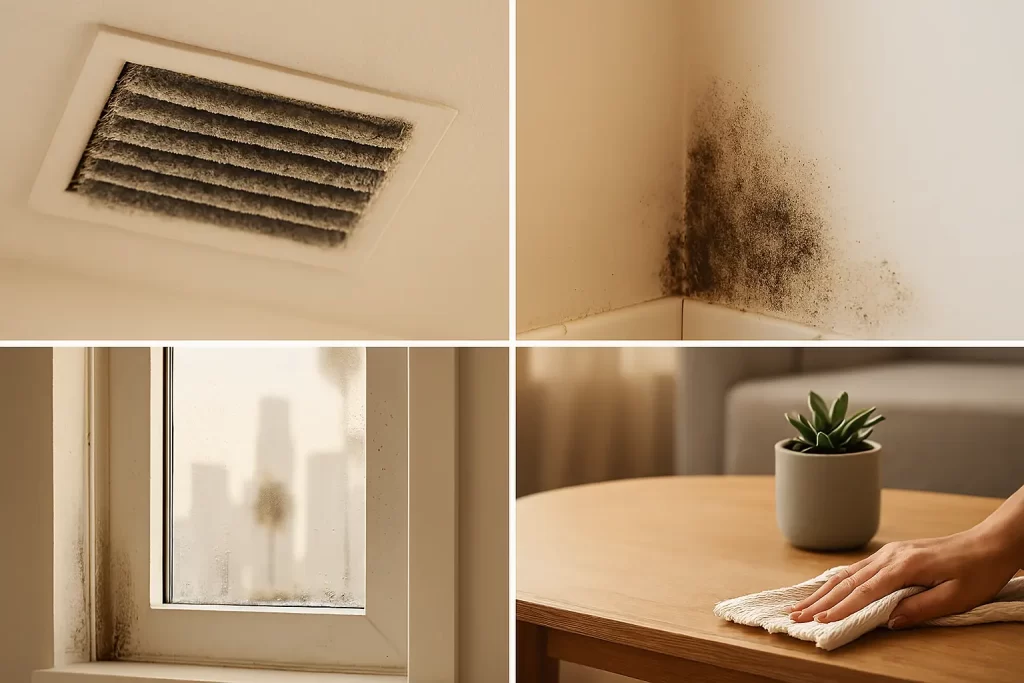
When dust reappears on surfaces within days of thorough cleaning, it indicates that your home’s filtration systems cannot keep up with the excess dust and particulate matter in your home.
Musty smells that persist despite cleaning and air fresheners may indicate hidden mold colonies. These colonies often establish themselves behind drywall, beneath flooring materials, or deep within HVAC ductwork. The odor you can smell represents only a fraction of the spores released.
Visible mold around windows, in bathroom corners, or on basement walls confirms excessive humidity and inadequate ventilation. These colonies thrive in moisture-rich environments and release microscopic spores that travel through air currents, settling in the lungs and potentially triggering allergic responses.
Staining or discoloration appearing on walls and ceilings often indicates water infiltration and microbial growth.
A comprehensive assessment measures your home’s air quality. It can quantify particulate levels, identify specific volatile organic compounds, measure carbon dioxide concentrations, assess humidity levels, and pinpoint exact allergen sources.
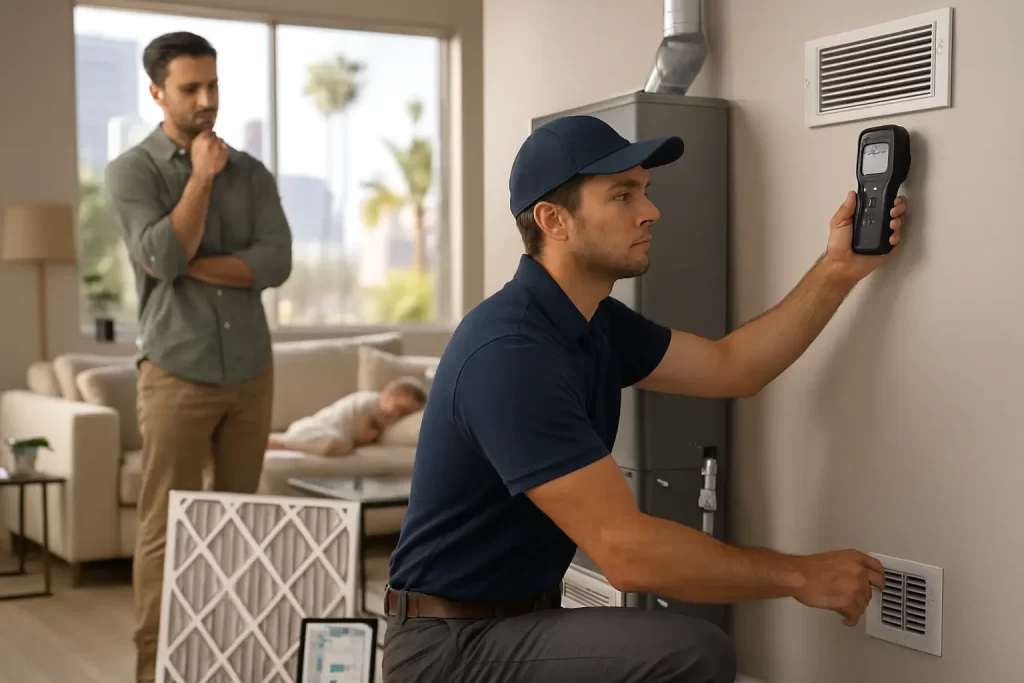
Professional indoor air quality testing combines air sampling with a thorough visual inspection. Technicians examine HVACs, check for hidden moisture, identify combustion by-product sources, and document conditions that promote biological growth.
Indoor air quality specialists serving Los Angeles understand unique environmental factors. They can identify immediate health threats requiring urgent remediation and potential long-term exposure risks. This localized expertise is especially valuable when addressing wildfire smoke infiltration and coastal moisture.
Your HVAC system either protects indoor air quality or undermines it. Neglected systems can become breeding grounds for bacteria, mold, and dust mites, which is why understanding how often to schedule air duct cleaning in Los Angeles is so important.
Regular professional HVAC maintenance identify problems early. Technicians can spot contaminated ductwork, recognize clogged filters, and detect moisture problems. Early detection prevents these issues from impacting respiratory health.
Modern HVAC technology is a powerful ally. New UV filtration systems neutralize contaminants, and HEPA filtration captures microscopic particles that standard filters miss. When combined with regular maintenance, these upgrades can improve overall air quality.
Explore the best air purification options for Los Angeles homes, including HEPA and UV systems.
Professional testing and HVAC inspections from trusted Los Angeles IAQ specialists offer lasting, effective remediation for healthy indoor air. Trained experts identify specific problems and develop targeted solutions that address root causes rather than masking symptoms.
Investing in proper air quality remediation alleviates existing symptoms while preventing future health complications.
Contact Affordable Heating and Air HVAC experts at (818) 722-1332 or visit our service page to schedule a comprehensive visit and map your way to a healthier living space.
Los Angeles homes trap a combination of outdoor pollution and indoor contaminants in an enclosed space that continuously recirculates through the HVAC ductwork. Smog and wildfire smoke seep in through gaps and ventilation, then mix with dust, pet dander, cleaning chemical vapors, gas appliance exhaust, and moisture-driven mold growth.
The result is indoor air that can feel heavy, stale, and irritating — often two to five times more polluted than the outdoor air, according to EPA research.
Start with observable clues: lingering odors, visible dust buildup, foggy windows, or allergy symptoms that worsen when you are home and improve when you leave. For measurable data, a home air quality monitor can track particulate matter (PM2.5) and volatile organic compound (VOC) levels in real time.
If you suspect mold, gas leaks, or severe contamination, bring in a professional indoor air quality testing service — they take air and surface samples and send them to a laboratory for analysis, which provides specific contaminant identification.
The most common indoor allergens in LA homes are dust mites, pet dander, mold spores, cockroach debris, and pollen that enters through open doors and windows.
To reduce them: vacuum with a HEPA-filter vacuum regularly, wash bedding in hot water weekly, use allergen-proof mattress and pillow covers, fix any water leaks promptly, run dehumidifiers in damp areas, groom pets regularly and limit their access to bedrooms, seal entry points against pests, and upgrade your HVAC filters to MERV 13 or higher.
A whole-home HEPA air purifier integrated into your existing ductwork provides the most comprehensive coverage.
If your home is constantly dusty despite regular cleaning, smells musty when the system runs, or your symptoms ease noticeably when you leave the house, an HVAC inspection is a practical next step. A licensed technician can check for dirty evaporator coils, clogged or low-quality filters, leaky or contaminated ductwork, and inadequate ventilation.
Based on the findings, they can recommend coil cleaning, duct sealing, filter upgrades, airflow rebalancing, or UV-C light installation to address the root cause. Affordable Heating and Air offers indoor air quality assessments services across Los Angeles and Ventura Counties.
Warning signs include dust resettling quickly after cleaning, stale or musty odors every time the system cycles on, visible dirt or discoloration around supply vents, and noticeably weak airflow in certain rooms.
If household members also experience increased sneezing, coughing, headaches, or asthma flare-ups that correlate with being at home — and especially if you see any mold growth on or near vents, registers, or ductwork — it is a strong indication that the HVAC system and ductwork need professional attention, better filtration, and possibly a full duct cleaning.