

If you’ve ever wondered, “Is something wrong with my heat pump?” you’re in good company. Many homeowners in Los Angeles County notice new sounds, longer run times, or steam from the outdoor unit and worry that something is wrong.
Heat pumps work a bit differently in Southern California compared to colder places. Our mild winters, dry summers, coastal humidity, and heat waves all affect how your system runs.
This guide will help you distinguish between normal heat pump behavior and real warning signs. Use it as a handy checklist to decide if you need basic maintenance or a professional repair.
Heat pumps move heat rather than generate it. In cooling mode, they remove heat from your home. In heating mode, they pull warmth from the outdoor air and transfer it inside.
Since Los Angeles usually has mild weather, your heat pump might run longer at lower speeds, cycle less often than older systems, and change output slowly instead of turning on and off quickly.
Modern variable-speed systems are built to run steadily. This makes them efficient and often quieter than older models. If your system runs for a long time during a July heat wave or a cold January morning, that’s usually normal.
It’s also normal for the temperature to swing by two or three degrees, especially in older homes that don’t have much insulation.
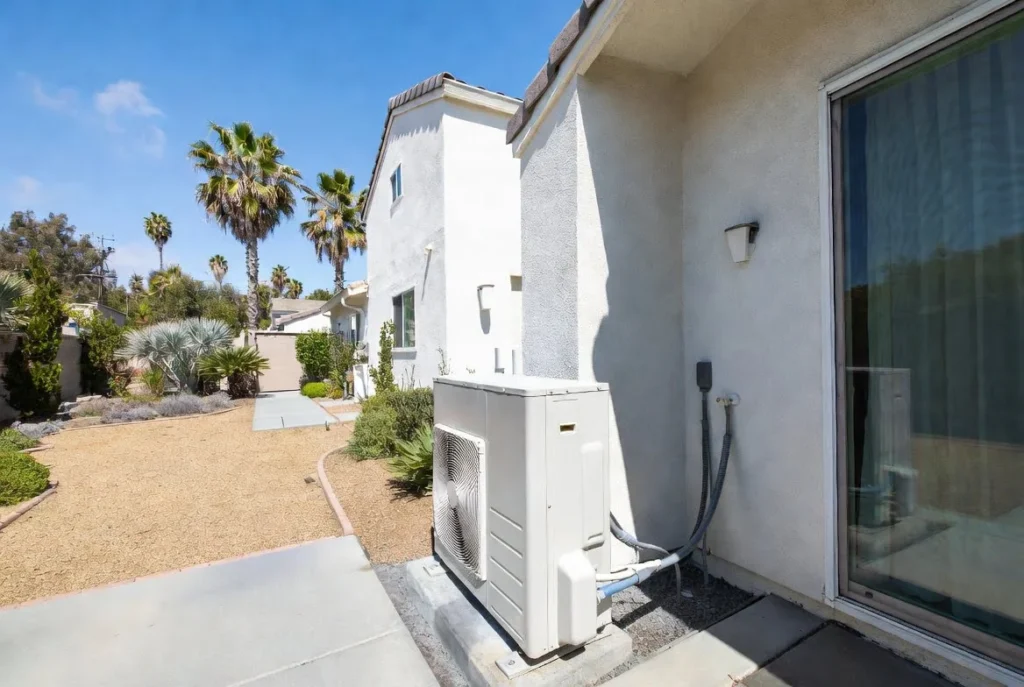
Some frost or longer run times are normal in LA’s variable weather, but to avoid bigger issues during heat waves or heavy rains, prioritize preparing your heat pump for Los Angeles weather ahead of each season.
Many homeowners look up “heat pump troubleshooting Los Angeles” because of strange sounds. Here’s what’s usually normal.
A soft click when your system turns on or off is just a relay or electrical part working. This is normal.
A steady hum from the compressor means your system is working as it should. It might sound louder during very hot weather.
When refrigerant moves through the system, you might hear light whooshing or bubbling sounds, especially when the system changes modes or goes into defrost.
Airflow can sound louder when it’s very hot or cold outside. That rushing air is just part of normal heat transfer.
Metal ducts expand and contract with temperature changes. Light popping or tapping noises are common, especially if your ducts are in the attic.
If these sounds are steady and not harsh, they’re probably normal for a heat pump.
Seeing steam or frost might seem worrying, but most of the time it’s completely normal.
Even in Los Angeles, cold mornings can cause frost to form on the outdoor coils. When that happens, your heat pump enters defrost mode.
During defrost mode:
This process keeps your equipment safe and running efficiently. The vapor you see is just water evaporating, not smoke. If the frost melts within an hour and your system goes back to normal, there’s usually nothing to worry about.
While most things are normal, some symptoms do need attention.
If you hear metal scraping or high-pitched screeching, that’s not normal. It could mean a motor problem or loose parts. Turn off your system and call for service.
If your heat pump keeps turning on and off every few minutes, that’s called short cycling. It makes your system less efficient and can cause wear and tear. This can happen due to thermostat problems, blocked airflow, or low refrigerant levels.
If your whole outdoor unit stays covered in ice for more than a day, especially when it’s not that cold outside, there could be a defrost or refrigerant issue.
If your home is always five degrees or more off from your thermostat setting, something needs to be adjusted.
If you smell something burning, take it seriously. Turn off your system and call a licensed professional.
These signs mean it’s time to call for repairs.
Southern California is not one single climate. Coastal areas like Santa Monica experience marine layer humidity, while inland areas such as Pasadena experience hotter, drier summers.
This changes how often your system defrosts, how much condensation you see, and how long it runs during heat waves.
When Santa Ana winds blow, dust can block airflow for a while. You might hear different sounds until the coils are cleaned.
Knowing your local climate helps you understand how your system works.
Before you call for professional help, check a few basics first.
If basic checks don’t resolve the issue, learn more about our fast, affordable repair process in Los Angeles → Guide to Fast, Affordable Heat Pump Repair in Los Angeles.
If the problem doesn’t go away, it might be time for a closer look by a professional.
Taking care of your system ahead of time makes it less likely you’ll have to wonder, ‘Is something wrong with my heat pump?’
A strong heat pump maintenance guide includes:
In Los Angeles County, it’s best to schedule maintenance in spring and fall. These checkups get your system ready for hot summers and cool winter mornings.
Regular maintenance helps your system run better, saves energy, and lasts longer. It also catches small problems before they turn into big, costly repairs.
Sometimes the real question isn’t if something is wrong, but whether you need a repair or just some maintenance.
Maintenance is usually the answer if your system runs but isn’t as efficient, your energy bills are creeping up, or the airflow feels weaker.
You probably need a repair if your system won’t turn on, makes loud mechanical noises, ice won’t melt, or breakers keep tripping.
If you’re not sure, a licensed C-20 contractor can check your system and explain what’s going on.
For recurring or major problems, it may be time to weigh repair costs against a full replacement → When to Repair or Replace a Heat Pump in LA Homes.
Yes, this is completely normal. The white vapor you see is water vapor produced when the defrost cycle melts frost from the outdoor coils. On mild, damp mornings in Southern California — common in coastal and valley communities — this indicates the heat pump is operating correctly. It is not smoke and is not a sign of a mechanical problem. The vapor typically dissipates within 5 to 15 minutes.
Heat pumps produce several sounds during normal operation: a low steady hum from the compressor, fan motor noise, and brief whooshing or hissing during the defrost cycle. In LA’s climate, these sounds are expected and are not warning signs. However, if you hear grinding, screeching, loud rattling, banging, or continuous buzzing, those are abnormal sounds that indicate a mechanical issue requiring professional attention.
A light frost or thin layer of ice on the outdoor coils is normal during cooler periods, even during mild Southern California winters. The coils can drop below freezing during heating operation, causing moisture in the air to frost over. Your heat pump’s automatic defrost cycle will periodically melt this frost. Thick ice buildup that does not clear within an hour, or ice forming on the refrigerant lines, is not normal and should be evaluated by a technician.
No. The steam you see during the defrost cycle is water vapor from melting frost — not smoke, not refrigerant, and not a sign of failure. The cycle typically runs for 5 to 15 minutes before the system resumes normal operation. If you see dark or discolored smoke with a burning smell, that is a different situation entirely and requires an immediate call to a licensed technician.
Normal sounds include a low steady hum, gentle whooshing or hissing during defrost, and brief clicking when the system starts or stops. Warning signs include grinding or screeching (worn bearings or motor), loud rattling or banging (loose components), clanking (debris or a loose part striking the fan), or a persistent buzzing or electrical humming (electrical component issue).
If you hear any of these warning sounds in your Los Angeles home, contact a licensed HVAC technician promptly to prevent further damage.
If your own troubleshooting doesn’t fix the problem, a professional can make sure it’s diagnosed correctly. It’s important to work with a licensed, bonded, and insured team. Heat pumps have electrical components and refrigerants that require specialized training and tools.
At Affordable Heating and Air, our technicians believe in clear communication and honest pricing. We’ll tell you what’s normal, what needs fixing, and what can wait. There’s no pressure—just straightforward advice so you can make the best choice. Call us and talk to a real person who can help your heat pump work its best.
Comfort should be simple. With the right information and a little care, your heat pump can keep your home comfortable all year in Southern California.