
In Los Angeles, heat pumps face operational challenges shaped by distinctive climate patterns. From mild winters to scorching summers, these units must adapt to dramatic seasonal shifts while maintaining optimal performance.
Without proper maintenance and optimization, heat pumps struggle during extreme weather events, consuming excess energy and potentially failing when needed most.
This guide explores essential maintenance practices, innovative usage strategies, and efficiency-boosting technologies that help LA homeowners maximize heat pump performance while minimizing energy costs year-round.
Key takeaways
Los Angeles’ climate creates specific challenges for heat pump operation, requiring seasonal adjustments to ensure peak performance through dramatic temperature variations.
Proper heat pump maintenance can reduce electricity consumption by up to 24%, making them exceptionally efficient in Southern California’s challenging weather.
Regular professional servicing, combined with innovative usage strategies, helps extend the system’s lifespan while maintaining comfort during extreme weather events.
Strategic thermostat programming and zone control capabilities allow homeowners to maximize comfort while minimizing energy waste across different seasons.
Over the last half-century, Los Angeles has witnessed a troubling transformation in its climate patterns. Heat waves now occur three times more frequently than in the 1960s, creating unprecedented challenges for cooling systems. During these intense heat events, heat pumps face a fundamental physics problem: as the temperature gap between indoor and outdoor air narrows, heat transfer efficiency diminishes significantly.
When outdoor temperatures climb past 95°F, the heat pump’s compressor is in danger. This vital component faces extraordinary strain during extended heat waves, potentially shaving years off its operational life without proper maintenance and care. Think of it as running a marathon in scorching heat—even the fittest athlete needs additional support under such conditions.
In prolonged heat events, refrigerant pressure can become dangerously imbalanced. This invisible but critical issue demands professional attention, as even minor pressure irregularities can cascade into system-wide failures. A properly maintained heat pump acts as the home’s first line of defense against LA’s increasingly frequent temperature extremes.
Short cycling emerges as another common symptom of heat-stressed systems. Like a car engine constantly starting and stopping in traffic, this pattern of frequent on-off cycles fails to maintain comfortable temperatures while accelerating wear on critical components. Without intervention, this inefficient operation pattern can lead to comfort issues and increased energy consumption.
To stay efficient during Santa Ana winds or sudden heat waves, start with strong heat pump weather preparation in Los Angeles—including debris clearance and raised unit placement.
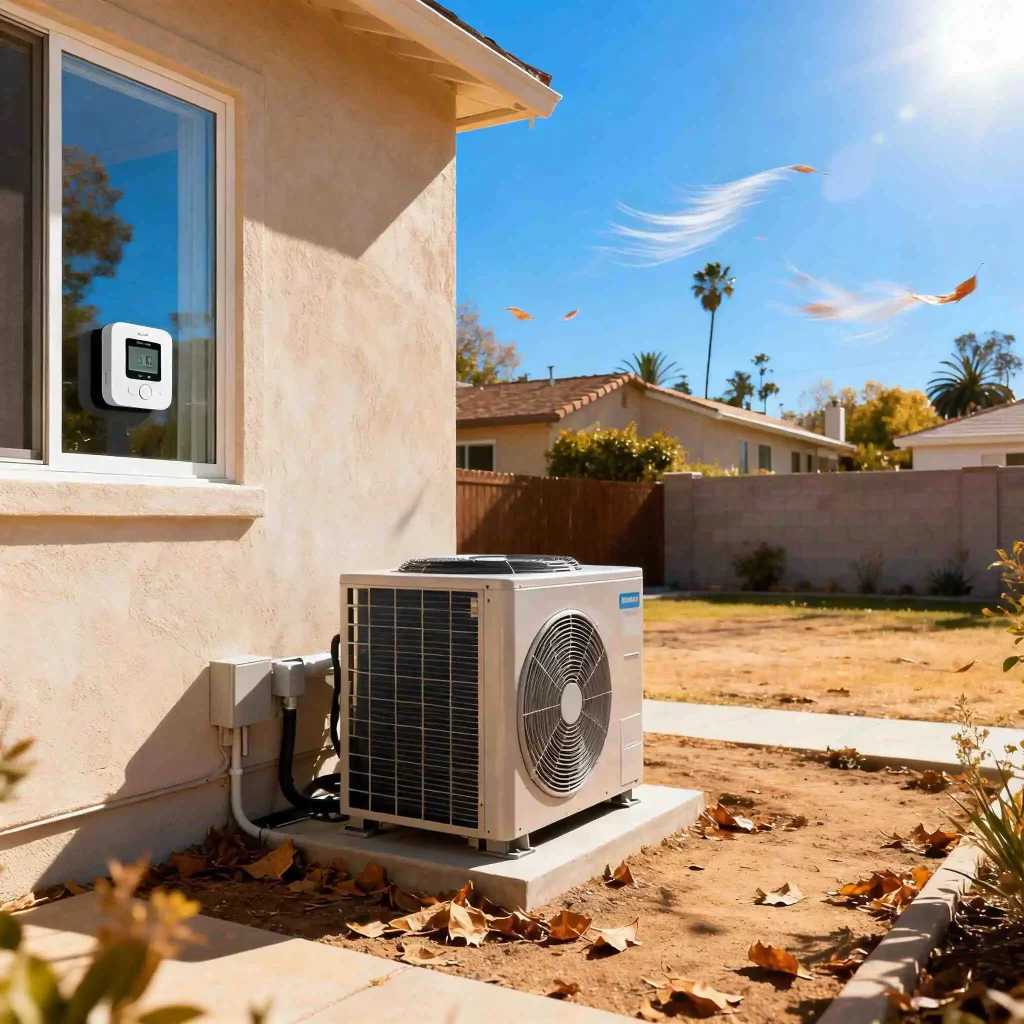
As autumn arrives and Santa Ana winds sweep through Los Angeles, maintaining clear space around your outdoor unit becomes crucial. These notorious winds carry leaves and dust while also depositing a steady stream of debris, which can significantly impair your system’s airflow. Regular clearing of this area ensures your heat pump does not have to work harder to maintain comfort.
The humble air filter plays an outsized role in system efficiency, yet it is often overlooked. During high-use periods, these filters should be inspected monthly and replaced every 1-3 months. A clogged filter forces your system to consume more energy while delivering less comfort, like breathing through a stuffed nose.
Before summer’s punishing heat arrives, attention must turn to the evaporator and condenser coils. These vital components accumulate dirt over time, creating an insulating layer that forces your system to expend additional energy. Professional cleaning of these coils ensures optimal heat transfer when you need it most.
Spring marks the ideal time for checking refrigerant levels. Even minor leaks can dramatically impact your system’s cooling capacity. Imagine cooling your home with a partially deflated balloon. Professional heat pump services can detect and address these issues before they compromise your summer comfort.
The thermostat plays a silent but crucial role in system efficiency. Miscalibrated thermostats trigger unnecessary system cycles, wasting energy and increasing wear. Regular testing ensures your heat pump responds precisely to actual temperature conditions rather than phantom readings.
Not sure if your heat pump is operating normally? Read our guide: Is Something Wrong with My Heat Pump, or Is This Normal in LA?
During Los Angeles’ sweltering summer days, the magic number is 78°F. Setting your thermostat at this temperature strikes an optimal balance between comfort and efficiency. This prevents system strain during intense heat waves while maintaining a pleasant indoor environment. This sweet spot allows your heat pump to operate within its design parameters rather than struggling against physics to achieve an unnecessarily low temperature.
As spring and fall usher in milder temperatures, switching your fan setting from “on” to “auto” can yield surprising energy savings. In auto mode, your system’s fan operates only while heating or cooling, eliminating unnecessary electricity consumption during moderate weather. This simple adjustment proves particularly valuable during Los Angeles’ shoulder seasons.
Ceiling fans deployed alongside your heat pump create a powerful efficiency duo. Generating a wind-chill effect, fans allow a higher thermostat setting without compromising comfort. This synergy proves especially valuable during warm periods, as each degree increase in thermostat setting can translate into meaningful energy savings.
Smart thermostats are particularly valuable for improving heat pump efficiency. These sophisticated devices can slash annual energy consumption by up to 10% through intelligent temperature adjustments based on household patterns. Rather than maintaining a constant temperature in an empty house, these systems learn and adapt to the schedule.
As night falls over Los Angeles, the sleep mode function uses naturally cooling temperatures. Aligned with the body’s natural temperature regulation, this feature gradually increases the thermostat setting overnight while maximizing system efficiency. The result is comfortable sleep and lower energy bills.
Heat pumps equipped with variable-speed motors represent the pinnacle of efficiency technology. Unlike their single-speed counterparts, these systems can modulate their output to match exact cooling demands.
This precise control proves particularly valuable in Los Angeles’ variable climate, where cooling needs can change dramatically throughout the day. Combine smart controls and variable-speed systems with advanced AI heat pump optimization. This setup can predict changes in LA’s weather and further improve efficiency.
Zone control capabilities transform how people think about home cooling. Instead of treating the entire home as a single temperature zone, these systems allow targeted cooling of occupied spaces. During Los Angeles’ hottest months, this granular control prevents energy waste in seldom-used areas while maintaining ideal comfort where it matters most.
Professional system diagnostics reveal systemic issues that often escape notice during routine maintenance. Regular checks of refrigerant levels and system performance metrics can identify subtle problems before they escalate into major repairs. If left unaddressed, these hidden issues can significantly impact comfort and operating costs.
The transition to ENERGY STAR-certified heat pumps with SEER ratings above 18 represents a quantum leap in efficiency potential. Beyond their technical specifications, these advanced systems slash cooling costs while qualifying for substantial rebates and incentives. In Los Angeles’ climate, high-efficiency equipment can return quickly.
At Affordable Heating and Air, our specialized heat pump services ensure your system maintains peak efficiency throughout Los Angeles’ challenging climate conditions. Speak with a real person to discover how our tailored maintenance programs can optimize your system’s performance while maximizing energy savings.
Let’s be clear: A comprehensive approach to heat pump maintenance and optimization delivers benefits far beyond immediate comfort. When homeowners implement the strategies outlined above, they can significantly extend their systems’ operational lifespan.
In addition, they can maintain the efficiency levels necessary to manage energy costs during extreme weather events.
The numbers tell a compelling story: Los Angeles residents who commit to comprehensive heat pump maintenance typically see 15-20% reductions in energy costs.
More importantly, these well-maintained systems prove far more reliable during critical cooling periods, when system failures can have serious consequences for comfort, safety, and health. When properly cared for and optimized, your heat pump becomes a reliable partner in managing Southern California’s increasingly challenging climate.
Clean or replace air filters every one to three months — monthly during peak summer use or wildfire smoke events. Keep outdoor coils clean and free of leaves, dirt, and debris, maintaining at least two feet of clearance on all sides. Ensure all supply and return vents inside the home are open and unobstructed by furniture or curtains.
Schedule professional inspections at least annually — ideally in spring before the cooling season — to verify refrigerant levels, tighten electrical connections, lubricate moving parts, and check the defrost cycle. Catching developing issues during routine service prevents costly mid-summer breakdowns and keeps efficiency at rated levels.
Use a smart or programmable thermostat compatible with heat pump operation — set a consistent target temperature rather than deep setbacks, because large temperature swings can trigger inefficient auxiliary electric resistance heat. In Los Angeles’s climate, setting the thermostat to 78 degrees Fahrenheit during summer days and 68 degrees during winter nights strikes a good efficiency balance.
If your utility is LADWP or SCE, program pre-cooling during off-peak hours to take advantage of lower time-of-use rates. Keep filters and coils clean, and ensure unrestricted airflow through all vents and ducts. These steps combined can improve energy efficiency by 25 percent or more.
A thorough checklist covers both homeowner and professional tasks.
Homeowner tasks (monthly to quarterly): inspect and clean or replace filters, clear debris from around the outdoor unit, verify all indoor vents are open, and wipe down the outdoor coil with a garden hose if visibly dirty.
Professional tasks (annually or bi-annually): check refrigerant levels and pressures, inspect all electrical components and connections, lubricate motors and moving parts, calibrate the thermostat, clean the evaporator and condenser coils, verify the defrost cycle, inspect ductwork for leaks, and run the system through a full heating and cooling cycle. Trim vegetation to at least two feet around the outdoor unit year-round.
Common issues include: unusual sounds (clicking, grinding, or rattling) — usually caused by loose hardware, worn bearings, or debris in the fan, requiring professional inspection. Uneven temperatures or weak airflow — most often from dirty filters or blocked ductwork, resolved by filter replacement and duct inspection.
Refrigerant leaks — signaled by declining cooling performance and ice on the refrigerant line, requiring licensed technician repair. Ice buildup on the outdoor unit — indicates a defrost cycle issue, thermostat problem, or low refrigerant. Short cycling (turning on and off rapidly) — caused by thermostat malfunction, airflow restriction, or incorrect sizing.
Rising energy bills without a usage change — often the first sign of declining efficiency needing professional diagnosis. Early detection through annual maintenance prevents most of these from becoming expensive repairs.
For systems providing both heating and cooling year-round — which applies to most Los Angeles heat pump installations — bi-annual professional service is recommended: once in spring (March or April) before the cooling season begins, and once in fall (September or October) before the heating season.
This schedule ensures the system is operating at full capacity before each peak demand period. At minimum, annual service in spring is essential since the cooling season is the heaviest-use period for LA heat pumps.
Affordable Heating and Air’s Care Club membership includes bi-annual tune-ups that cover both seasonal transitions.