

AI-enabled HVAC systems do more than heat and cool your home. They learn about your daily routine, monitor performance in real time, and adjust airflow and temperature based on sensor data throughout your house.
For these systems to perform at their peak, they require precise care. An AI HVAC tune-up in Los Angeles is more thorough than standard maintenance. It protects both mechanical parts and smart features that boost efficiency.
In Southern California, HVAC systems must handle coastal humidity, poor air quality, and large temperature swings from morning to afternoon. These factors can affect how well sensors work and how the system learns over time. Regular seasonal service keeps your system accurate, responsive, and efficient. Here’s what you should know.
To keep your AI-enabled system performing at its best year-round, pair these specialized tune-ups with our comprehensive HVAC maintenance plans that include priority scheduling and proactive checks.
Traditional AC systems mostly use mechanical parts. AI systems add extra technology, such as temperature sensors, humidity monitors, occupancy detectors, and air quality sensors. These sensors send data to a central processor.
If a sensor is out of calibration, the whole system reacts incorrectly. It might overcool a room or run it longer than needed. Over time, these small errors reduce efficiency and accelerate wear.
Professional calibration ensures accurate readings and prevents over-cycling—schedule a full smart system inspection as part of our energy-efficient HVAC services to maximize long-term savings.
Smart thermostats and zone controls need to be checked, too. Updating firmware improves performance and fixes security issues. If you skip updates, you might lose some features or risk your home network.
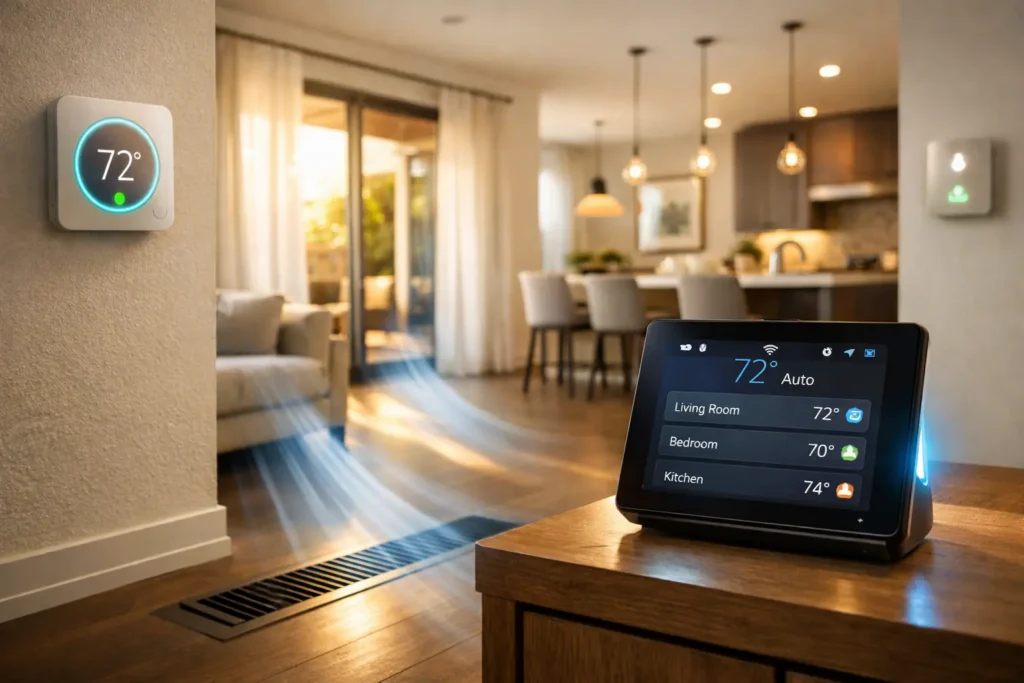
A connected AC service checks that the wireless sensors are talking to the main unit as they should. Weak signals, low batteries, or interference can affect your home’s comfort. During a tune-up, technicians do more than just change filters—they ensure the network is stable and reliable.
Spring is the right time for a full AI HVAC tune-up, so Los Angeles homeowners are ready for the summer heat.
Dust and pollen can build up on sensors during the winter. Even mild Southern California winters bring debris from the wind and early flowers. Cleaning the sensors helps them stay accurate and maintain correct airflow readings.
Technicians should also check how your system learns. If your routine changes with the seasons, AI might still follow old habits. Updating your home’s learning ensures it stays cool when you’re there, not when it’s empty.
It’s also worthwhile to check the weather integration features. Smart systems use weather forecasts to cool before the hottest part of the day. If this feature stops working, the system reacts instead of planning. Predictive tune-ups ensure these advanced features work as they should.
Resetting patterns after winter is essential, but many LA homeowners also benefit from upgrading to AI-optimized heat pumps that adapt automatically to our mild seasons.
Summer stresses your cooling system. AI systems work best during this time, but only if they’re well-maintained.
Technicians should test load balancing across different zones to ensure dampers and airflow controls respond correctly. Rooms with lots of sun need more cooling than shaded ones. AI needs to read these differences and adjust immediately.
Refrigerant levels and electrical connections need to be checked. Even the smartest systems can’t compensate for low refrigerant or loose wires. An excellent mechanical condition supports smart features.
Mid-season checkups are helpful in the hotter areas of Los Angeles County. Extreme heat stresses compressors and fans. A proactive AC service visit can catch small problems before they become breakdowns during the busiest time.
Autumn in Southern California means warm afternoons and cool evenings. AI systems need to switch smoothly between cooling and heating.
During a fall tune-up, technicians check that the temperature settings are correct. Sudden temperature changes shouldn’t cause the system to turn on and off too often or make your home uncomfortable.
Indoor air quality sensors need extra care. Fall winds can bring dust and smoke. Accurate sensors help the system independently adjust the filters and ventilation. If sensors are off, the air quality features won’t work as well.
During the fall pre-tuning, technicians will also check the heating settings. If your family’s routine changes with school or work, the system needs to adjust. Seasonal recalibration keeps your comfort in sync with your lifestyle.
Even mild winters need attention. AI systems track heat across different zones using advanced temperature mapping. If sensors read data incorrectly, some rooms might feel colder than others.
Managing humidity is also critical. Coastal areas of Los Angeles County can experience high humidity in winter. Smart system maintenance ensures dehumidifiers work properly, preventing discomfort and moisture problems.
Even in LA’s mild winters, humidity swings can impact performance—our heating tune-up service includes checks for these exact conditions to maintain accuracy and efficiency.
In winter, moving furniture or putting up holiday decorations can block vents or change airflow. Seasonal inspection helps the AI system identify temporary changes and avoid long-term adjustments to short-term issues.
One of the most valuable things about AI-enabled systems is predictive maintenance. The system always checks performance data and compares it to past results. If it notices small changes, it alerts.
But predictive features need accurate baseline data. If you skip seasonal maintenance, the system may lack reliable reference points. It could miss early warning signs or send alerts you don’t need.
Predictive tune-ups set seasonal benchmarks and adjust detection settings based on your system’s age and use. This helps AI spot problems early, before they become expensive.
Technicians should also ensure alerts are sent to the correct devices. Notification settings change after software updates. Making sure messages get through helps you act fast when needed.
AI HVAC systems are expensive. Their value comes from efficiency, adaptability, and savings over time. Without regular care, those benefits can fade.
Problems like sensor drift, outdated firmware, or minor mechanical issues can slowly degrade performance. Homeowners might not notice until their energy bills rise or comfort drops.
Smart system maintenance protects both hardware and software. It keeps learning features sharp, supports accurate zoning, and maintains strong connections. Most importantly, it prevents breakdowns during the busy season.
For tech-savvy homeowners, maintenance isn’t just about cleaning coils. It’s about protecting data-driven performance.
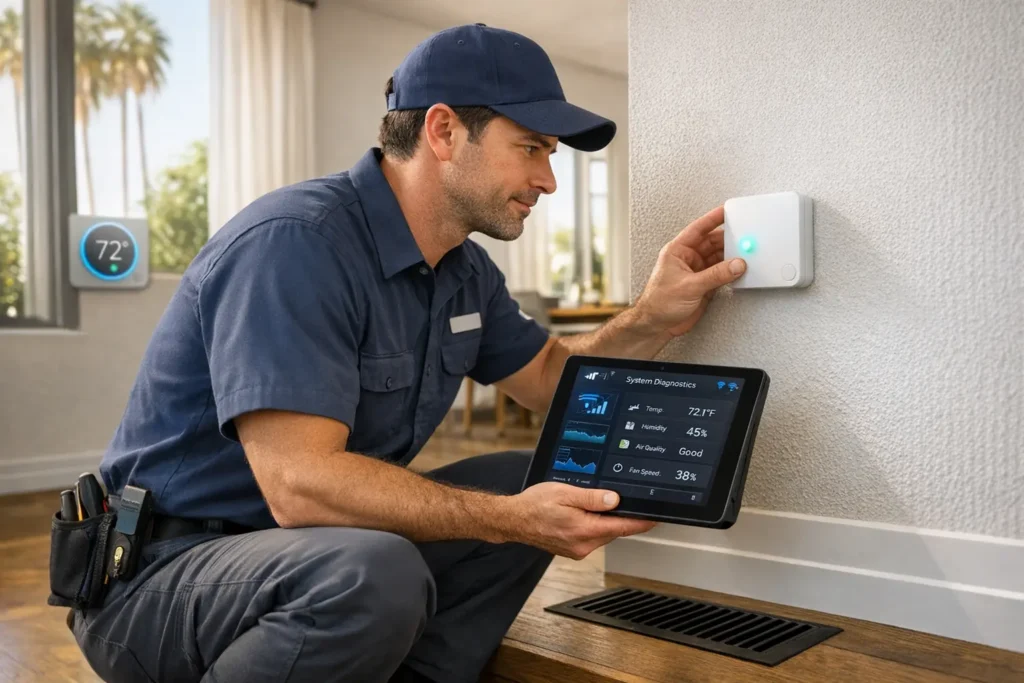
An AI HVAC tune-up in Los Angeles is a seasonal service in which a licensed technician checks and optimizes both the mechanical components and smart features of your connected HVAC system. This includes verifying smart thermostat calibration, reviewing AI-generated usage data and alerts, cleaning coils, checking refrigerant levels, and inspecting ductwork. The goal is to ensure the system’s sensors, learning algorithms, and physical components are all working accurately and efficiently together.
Predictive tune-ups use data from your system’s AI platform — such as runtime trends, temperature deviation alerts, and energy usage patterns — to identify developing problems before they cause a breakdown. A technician reviews this data alongside a physical inspection to clean components, adjust settings, and address early warning signs. This approach reduces emergency repair costs and extends system lifespan.
Most AI-enabled HVAC systems in Los Angeles benefit from a professional tune-up every 6 to 12 months, depending on usage intensity. Southern California’s longer cooling seasons, coastal salt air, and valley dust make annual or bi-annual servicing particularly important. Even smart thermostats require professional calibration, filter verification, and duct inspection to maintain the accuracy their learning algorithms depend on.
Yes. Although Nest and Ecobee thermostats learn and adjust settings automatically, professional seasonal tune-ups keep sensors calibrated, vents and coils clean, and the underlying HVAC system in good mechanical condition. This is especially important for getting reliable performance from demand-response and energy-saving features, and for ensuring the thermostat’s AI is working from accurate data rather than compensating for a system that needs service.
Yes. Smart thermostats manage temperature schedules and can detect some performance issues, but they cannot clean coils, check refrigerant charge, or inspect ductwork for leaks. A professional seasonal check addresses these physical maintenance needs, ensuring the connected system your thermostat is controlling is actually operating at the efficiency level the smart device is trying to achieve.
Servicing AI systems takes more than basic HVAC skills. Technicians need to know networking, software updates, data analysis, and mechanical diagnostics.
Choosing a C-20 licensed, bonded, and insured HVAC company means professional care. Following the manufacturer’s recommended steps also protects your warranty and keeps your system in proper condition.
Affordable Heating and Air offers connected AC services designed for AI-enabled systems. Our technicians blend hands-on mechanical skills with technical know-how for smart features. We offer clear pricing and honest communication, so you can feel confident in every recommendation.
Seasonal tune-ups aren’t optional for advanced systems—they’re essential. Regular AI HVAC tune-ups help Los Angeles homeowners stay comfortable during heat waves, cool evenings, and everything in between.
Smart systems think ahead. Your maintenance should be, too.
If you want your system’s sensors, software, and predictive features to stay in top shape, now’s the time to act. Learn more about our AC tune-up and maintenance services or book an appointment online. You can also call (818) 722-1332 to talk to a real person and schedule your next seasonal tune-up.