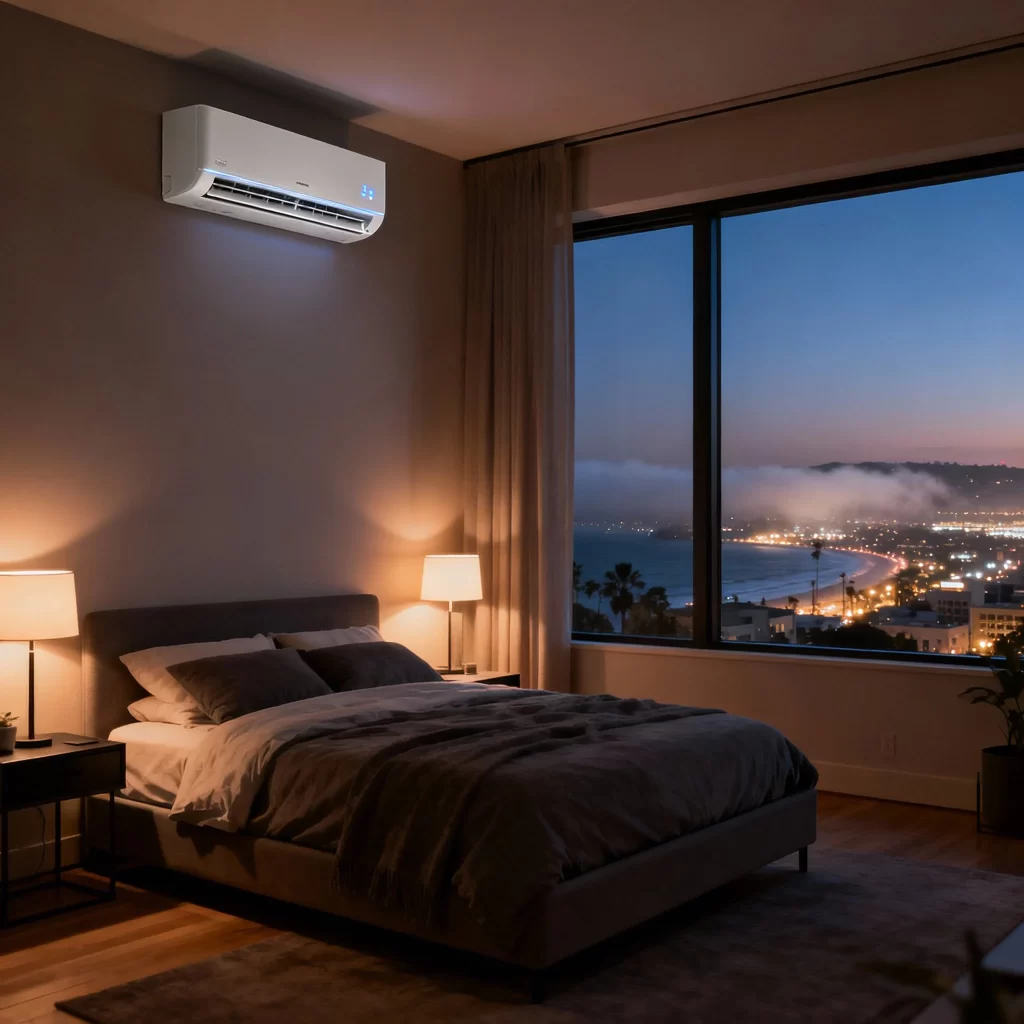

In Los Angeles, morning fog gives way to crushing afternoon heat. Such microclimate shifts are a headache for homeowners using traditional central air conditioning systems that cool all rooms as one uniform space.
Mini-split systems offer a smarter option. They deliver precise zone control to meet the unique cooling needs of different areas throughout your house.
Key takeaways
Mini-split systems shine in the spaces where comfort matters most. Below, we’ll explore the five rooms in LA homes that gain the biggest advantages from ductless cooling.
The rise of remote work has transformed LA’s spare bedrooms and bonus spaces into permanent home offices. While temperature is key to comfort and productivity, these makeshift offices are often at the mercy of poorly designed ductwork that either blasts arctic air or barely reaches the room at all.
For some remote workers, mini-splits are revolutionizing comfort. Unlike window units or central air systems, mini-splits are inconspicuous (no box unit blocking your view) and whisper quiet.
Even more appealing is their efficiency. Why pay to cool an entire house when you are spending eight hours in a single room? Mini-splits allow you to maintain ideal working temperatures in your office while keeping other areas at more economical settings.
Improved sleep is another win. Sleep science reveals that our bodies crave cooler temperatures for optimal rest, specifically between 60-65°F. In Los Angeles, achieving this ideal range can be challenging.
Master bedrooms, particularly those on upper floors, present a special challenge. Heat accumulates throughout the day and becomes trapped indoors, creating a lingering greenhouse effect. Traditional cooling methods often struggle to overcome this thermal inertia, leaving homeowners tossing and turning at night.
But with modern mini-split systems, you can schedule your bedroom to reach and maintain the perfect sleeping temperature throughout the night without the energy waste of cooling unused rooms.
The near-silent operation of these systems represents a dramatic improvement over the sleep-disrupting cycles of traditional AC units or the loud drone of window-mounted systems.
Discover why mini-splits outperform traditional cooling systems for bedroom comfort.
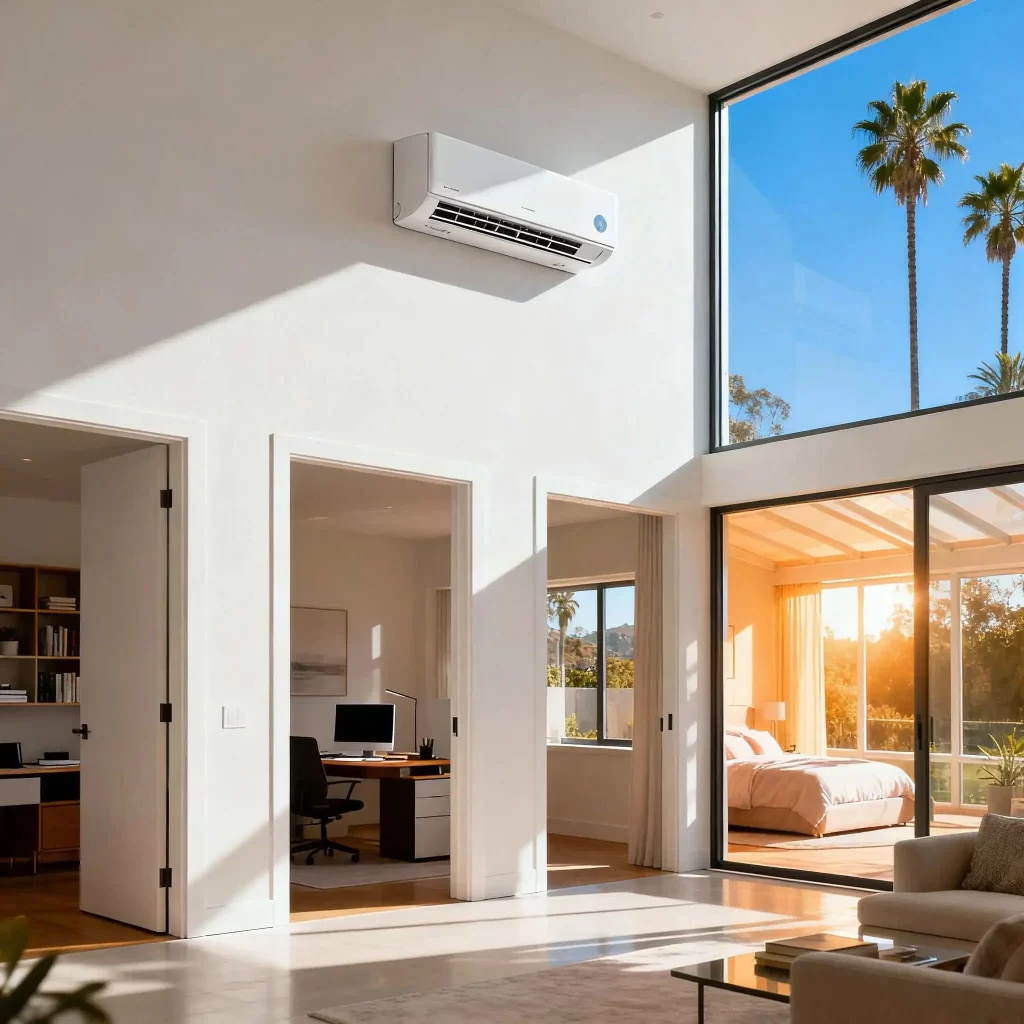
As housing costs soar, converted garages and ADUs (Accessory Dwelling Units) add valuable square footage. They offer a path to additional income, but no tenant wants to rent a stifling shed.
Cooling these converted spaces is a challenge. Most garages were never designed with sleep comfort in mind, featuring bare concrete floors and minimal insulation. Ductwork modifications would require extensive construction, often making the project unaffordable.
Mini-splits, however, bypass the need for complex ductwork modifications. They offer a direct solution to temperature control for maximum comfort while maintaining structural integrity. Concrete floors and minimal insulation highlight the effectiveness of mini-splits. They excel at maintaining comfort in challenging areas, creating living spaces that can command premium rental rates.
LA’s famous sunshine becomes less welcome when it transforms your windows into a solar furnace. Beautiful sunrooms can become unbearable when the sun is out.
Traditional cooling systems are often inadequate for these sun-drenched areas while still wastefully pumping cold air into unused spaces. In sunny rooms, it’s like trying to cool a greenhouse with a fan. You’ll get some benefit, but not full relief.
Mini-splits offer a precision solution. Discreetly mounted near ceilings, these units can direct cool air exactly where it’s most needed. The result transforms previously sweltering spaces into comfortable retreats, regardless of the sun’s intensity.
Across LA’s diverse neighborhoods, renovation projects often hit a cooling system roadblock. Extending existing ductwork into new spaces can quickly balloon budgets and compromise architectural integrity.
Mini-splits seamlessly integrate into renovated homes. Their compact design and minimal installation requirements—typically just a three-inch hole for connecting indoor and outdoor units—mean the architect’s vision remains intact.
The flexibility of these systems is particularly valuable in LA’s older homes, where traditional HVAC modifications would otherwise force compromises in historic preservation or design integrity.
Regardless of which rooms you choose for mini-split installation, proper maintenance is essential. Follow our mini-split maintenance guide to ensure optimal performance in every zone.
The top five rooms for mini-split installation in LA homes are:
(1) Bedrooms — especially second-story or west-facing rooms that overheat in the afternoon, where quiet operation and individual temperature control improve sleep quality.
(2) Home offices — for personalized comfort during work hours without conditioning the entire house.
(3) Converted garages and ADUs — these spaces rarely have existing ductwork and benefit the most from ductless cooling.
(4) Attics and bonus rooms — typically the hottest spaces in the house due to direct roof exposure.
(5) Sunrooms and room additions — where extending existing ductwork is impractical or cost-prohibitive.
Mini-splits deliver efficient zoned control in each of these spaces without requiring ductwork installation.
Indoor units perform best when mounted high on an interior wall, positioned to distribute airflow evenly across the room without obstructions from furniture, curtains, or shelving. Avoid placing indoor units above heat sources or in direct sunlight.
The outdoor condenser should be installed in a shaded, well-ventilated location as close to the indoor unit as possible — ideally on the north or east side of the home to minimize direct sun exposure. In the San Fernando Valley and other inland communities where summer temperatures regularly exceed 100 degrees, shading the outdoor unit can improve efficiency by 5 to 10 percent.
Professional sizing based on room dimensions, insulation quality, window exposure, and occupancy is essential for optimal performance.
Mini-splits excel in all three spaces for different reasons. In bedrooms, their quiet operation (often below 25 decibels) and precise temperature control make them ideal for uninterrupted sleep — a significant advantage over window units or portable AC.
In garages and converted ADUs, mini-splits provide effective heating and cooling without the cost or complexity of running new ductwork, which is especially valuable for LA’s growing ADU market.
In home offices, a dedicated mini-split zone lets you maintain comfort during work hours without conditioning the rest of the house, reducing energy waste by only cooling the space you are actually using.
A portable AC is a mobile, single-unit device that provides temporary, localized cooling. It requires a window for the exhaust hose and works well as a low-cost, short-term solution for renters or occasional spot cooling. A mini-split is a permanent, professionally installed two-part system — an indoor air handler connected to an outdoor condenser via a refrigerant line.
Mini-splits offer significantly higher efficiency, quieter operation, both heating and cooling capability, and individual zone control. For Los Angeles homeowners who plan to stay in their home long-term, a mini-split typically pays for itself through energy savings within three to five years compared to running portable units.
Yes. Mini-splits can increase a home’s market value by making the property more comfortable, energy-efficient, and appealing to buyers. Industry sources suggest a potential value increase of 5 to 10 percent, and in Los Angeles — where ADU conversions, older homes without central air, and architecturally challenging layouts are common — the value impact can be particularly strong.
Buyers in LA actively seek homes with modern, efficient cooling solutions. A well-installed multi-zone mini-split system that provides whole-house comfort without ductwork is a meaningful selling point in a competitive market.
Cooling Los Angeles homes demands solutions as innovative and unique as the city itself. Mini-splits deliver targeted cooling that can reduce energy costs by up to 30% compared to traditional central systems.
While different homes have different cooling needs, mini-splits stand out because they address the specific needs of each space rather than applying a less effective one-size-fits-all solution.
—> Ready to optimize your home’s comfort? Text us now at (818) 722-1332 or explore our flexible and affordable service options for zoned cooling. From properties to hillside retreats, we can help you discover the perfect cooling solution for your LA lifestyle.